Behind-the-scenes of 8 Kinds of Laksa
YOUTUBE INSPIRATIONS
Pressure to deliver
As you already know, I was invited to feature Revolut in this video and there is pressure to mention “Revolut” within the first 3 minutes of the video. Hence, it might feel abit rushed to go through the first Nonya laksa by glossing over many details, but I try to make it up by talking more about it in Katong laksa, after the integration segment. This generally sets the tone of the rest of the video to describe how I make each laksa in a similar level of detail, although I’ve learnt so much from making these laksa that I wish I could go into detail, so I did up this blog post to share more of the inspirations behind this video. I would have made it the same way if there is no sponsored segment because I thought it would be fun to imitate one of my favourite videos on YouTube.
Inspirations
This intro of this video is mostly inspired by Bon Appetit’s handcrafted video series. I love how the intro is really quick, to the point, and draws you in to learn more about the craft, be it 29 types of pasta shapes, or 12 kinds of sushi, 8 kinds of dimsum. And actually it’s really hard to make that intro. It shows an intro scene where I shot in wide angle for the first time in my videos and only exclusively in this video so far. The rest of the time is just neck down to focus on the food and preparation techniques.
After studying the 10 to 15 seconds intros of those videos, I identified these key features that they have in common
For sounds, it starts off with a dramatic hit, followed by masterchef introducing himself “my name is X, and today I’m going to do Y today from these ingredients”, and end with a final hit that reveals the graphic title of the video
We also hear action sounds of tools related to what they’re making
Pasta dough slamming on the table
Smacking cleaver on har gao skin
Metal tool scrapping the pan
Sizzling sounds of what’s cooking
Chopping noodles
Sharpening of knife
What is actually shown on screen are closeup action scenes of doing the thing with closeup on the food and hands, alternating with wide angle view of the masterchef.
Action close-up scenes
Wide view of the person
Beginning to end preview of making the dish
Fast cuts
Table spread of ingredients
Graphic titles of ingredients
I think the whole idea of this Handcrafted series is to show the transformation of ingredients into dishes. It combines the idea of top down food photography commonly seen in this niche, with video tutorials of making food from scratch. It’s interesting to see how ingredients turn into actual dishes we see, like sushi, or from a big cut of cow or pork into smaller cuts we see in the supermarket. The pasta one is just out of the world because those many shapes are really artisanal and I don’t know if we could even find all of them in Italy restaurants today, apart from the common ones.
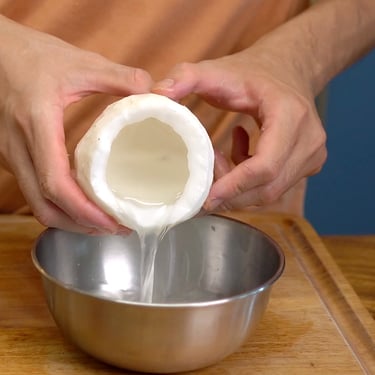
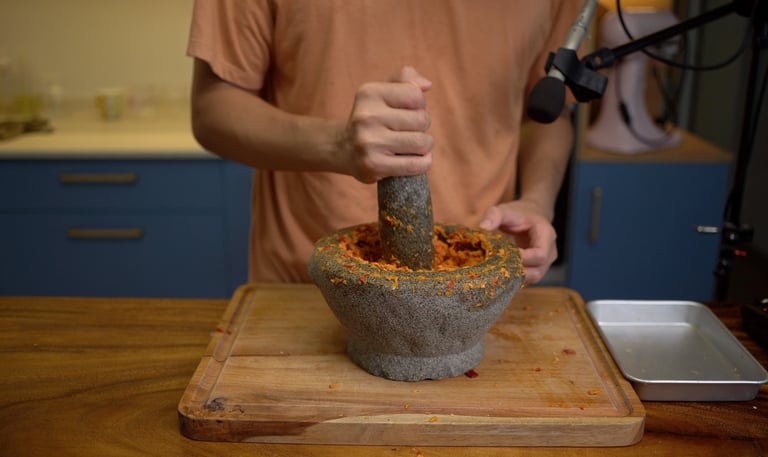
Anyway, I tried to imagine what it would be like if this series were to be about Laksa, so I thought hard about what sounds I could use and the key scenes, and narrowed down to the mortar and pestle of pounding spices, grating the fresh coconut to extract its milk, and frying the sambal in oil. As I already shot the mortar and pestle pounding top down, I thought of using that since it ties in nicely with the top down photos of the ingredients to follow. I didn’t have enough time to include the sambal frying one, so I left that out. Since the pounding and grating ones are more hands-on and artisanal in a handcrafted sense, I included those sounds as they’re important parts of the laksa recipe and also a traditional way of making the base and the coconut milk.
Another video that somewhat influenced this idea is Dianxi Xiaoge’s spotlight on mooncakes across China. https://www.youtube.com/watch?t=1775&v=ScJC4caUouo&feature=youtu.be She drew a map of China very accurately on a large table, then placed the dozen over mooncakes in each region, then invited her village to feast over the mooncakes to mark the festival.
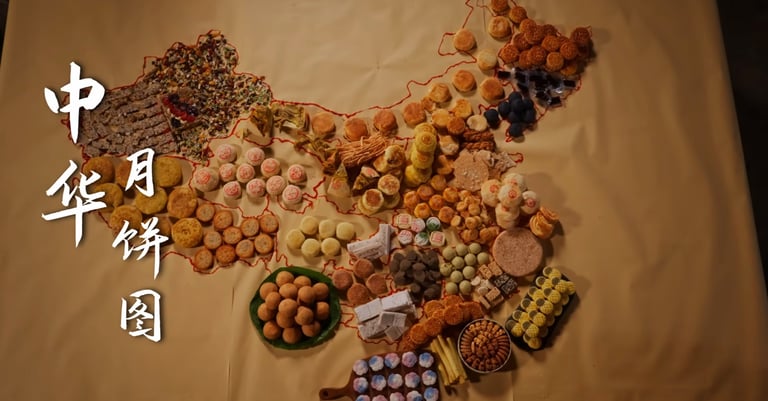
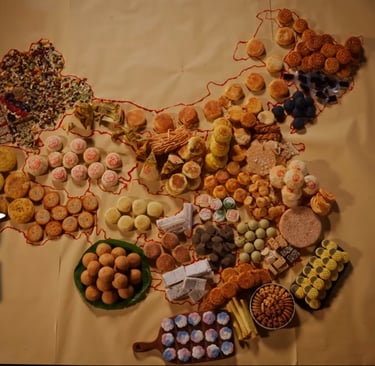
Similarly, I did that in the outro to hopefully give viewers a surprise that the thumbnail or photo is not digitally pieced together, but it’s actually 8 bowls of laksa on the table that me and Natasha could help ourselves to, and “travel” across many types of laksa in the region.
Audio choice
For the music, I could have left it as an international digitally composed beat, but I wanted something more regionally special, and thought of the kompang. It is a Malay hand drum and often played in Malay weddings, Malay festivals, or to welcome guests of honour. I like how it sounds energetic with interlocking drum rhythms that has layers of beats, each layer played by a few people. Since we’re talking about laksa with Malay origins, I thought it would be appropriate to use this instrument to kickstart this series and replace the conventional snare drum. I’m not really a music expert or sounds expert so I found an artist on Fiverr to compose the music. But it turns out that they just grab stuff from a stock library and make some changes, but it still didn’t hit the mark I was looking for. I tried chatgpt and it returned a dull beat like a metronome and totally didn’t meet my expectations, so AI still has a long way to go in terms of audio generation.
It turns out that the kompang is a very niche percussion instrument so I couldn’t find it in stock audio libraries. There are close-sounding ones so after auditioning several tracks, I finally settled on a few from Artlist. This is actually an intense drums track composed for military and war films like soldiers fighting in a jungle, hence the ‘world’ theme to it. But after listening it in my video, I feel it kind of matches the vibes of my voice, the natural ingredients I’m using, a big world map of Southeast Asia, cooking up a fiery orange soup so yeah glad it worked out.
Play with flatlay photography
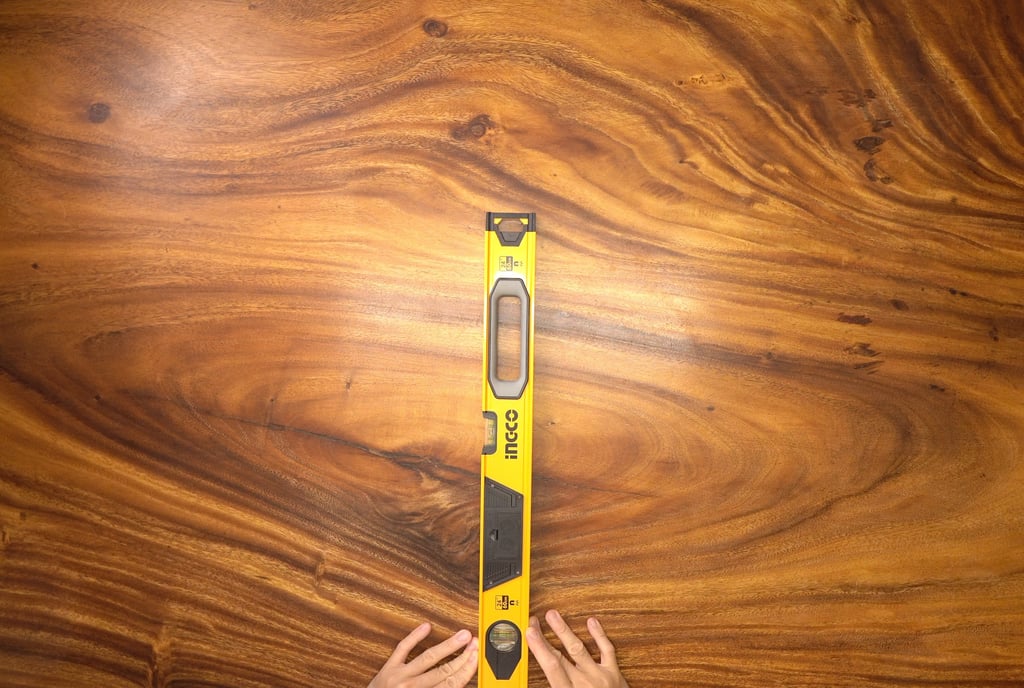
This is the first time I stretched myself to capture flatlay photography, where we get the flat down view of a table. This is widely used in Bon Appetit’s videos and I think it communicates a nice visual to see as many ingredients as possible on a flat plane. So I got my C stand to work and bought a trusty Manfrotto clamp mount 035 and bought it that’s only sold in Cathay Photo, probably the oldest photography gear shop in Singapore. Still, I had to climb on a chair to adjust the camera settings, even though I got a mini TV display. You can see my toes on this one due to the 6000 by 4000 RAW image resolution of the camera, so we get abit more height with a 3:2 for the same width than a standard 16:9 aspect ratio.
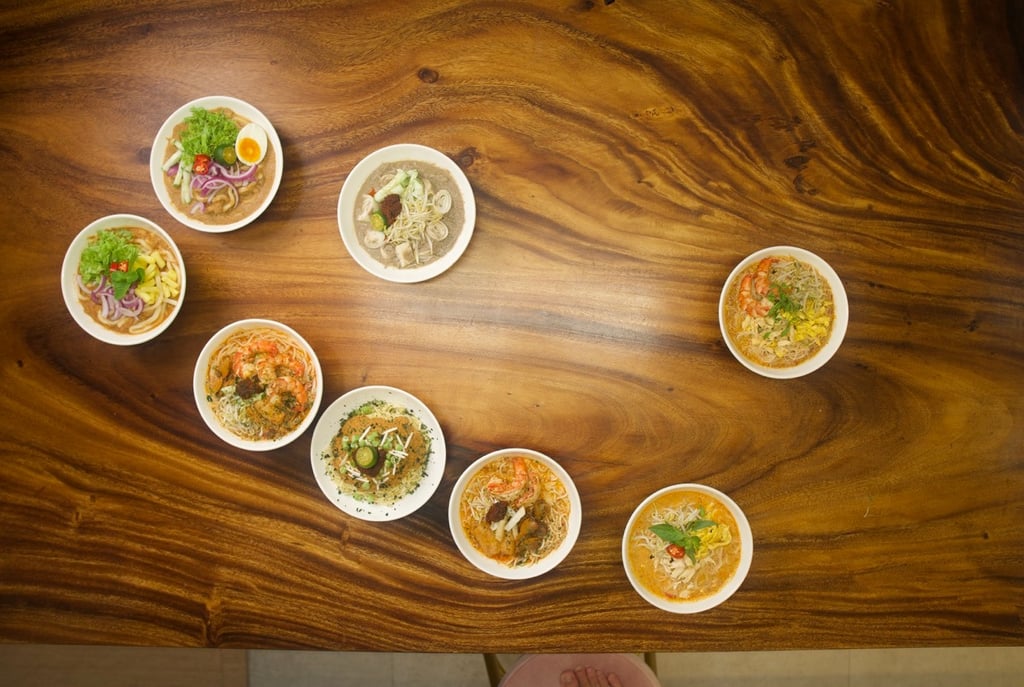
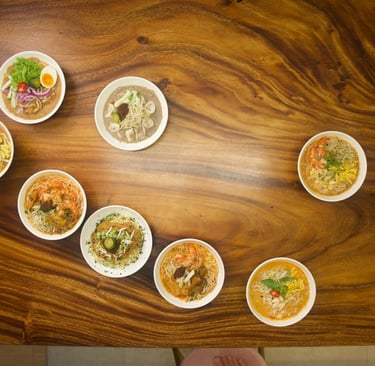
To straighten it out, I used a spirit meter to ensure it's with + - 1.0 degrees level, and also eyeball the meter to look straight on the table.
However, the clamp is not perfect as its grip shifts over time so not a 100% steady grip. You might notice at the stop motion beginning of the laksa that the table view shifts slightly. Where it gets really bad, I tried to patch in post, especially the Jakarta one by overlaying the edges and feathering it slightly to smooth it out. But overall, we can still see objects straying off like stop motion.
Map artwork
It turns out that the artwork to draw the Malaysia map is not as easy as I thought. Initially I tried to fit a silhouette of the islands in photoshop, and stretch it to accommodate the bowls, but I found it was quite difficult to make it look realistic enough. In fact, for the final scene, I just eyeballed the positions of the bowls and hope for the best in post-production. This is a draft of the map that I made in photoshop. It’s obviosly not very good, but it gave me the confidence to actually do it and take the photo.
The inspiration behind this is again linked to Bon Appetit’s videos where they draw a cow or a goat around the cuts of meat to be broken down.

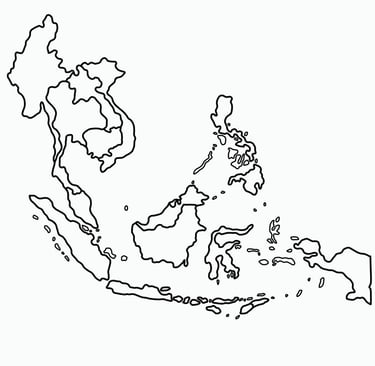

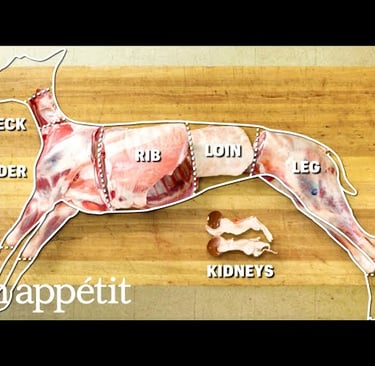


I initially thought of doing the photoshoot digitally by making each bowl 1 at a time, then combine it digitally in photoshop. But I would run into problems like fake shadows as notice how a real photo with all the objects there would have natural shadows depending on where the light is placed. If this map tracing project fails, the backup is to just do a photo collage of the hero shots of each laksa.
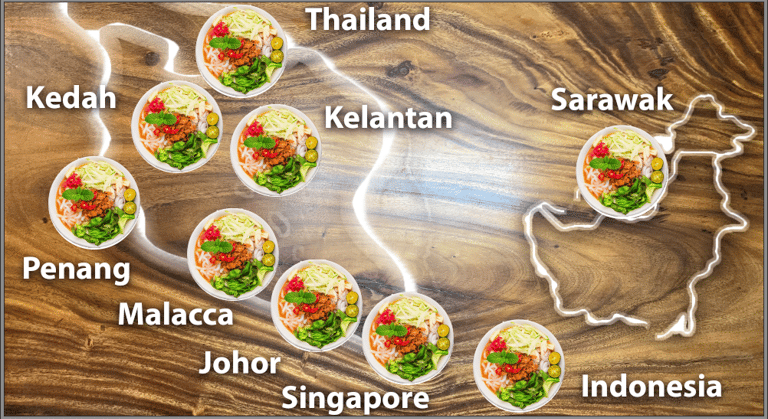

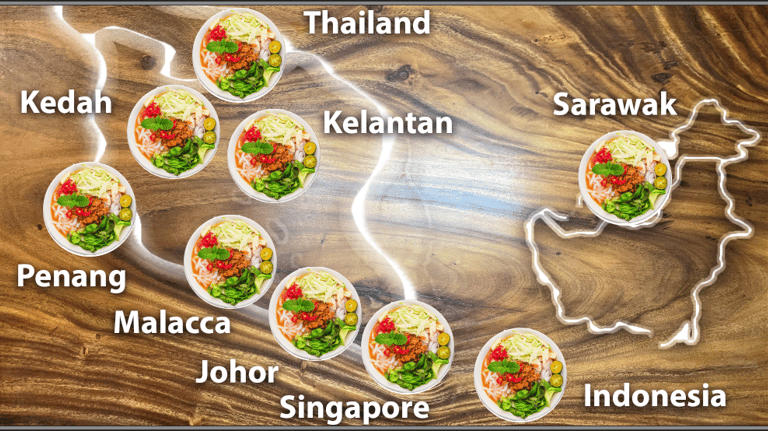
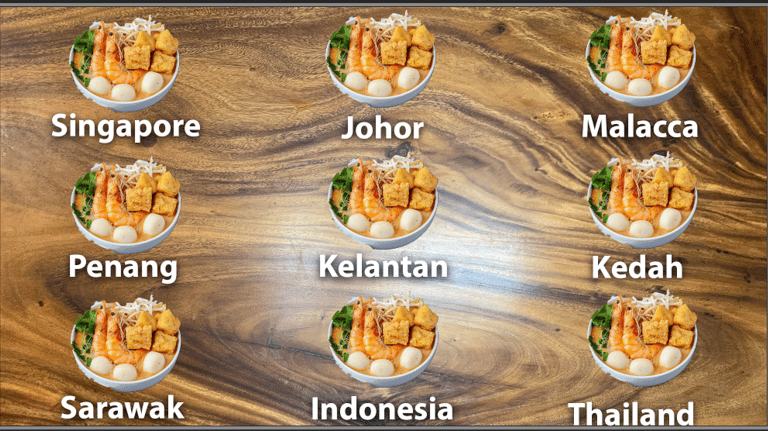

But luckily I found a great illustration artist, Khayyam on Fiverr to do the map. He basically drew the map by hand using a “a Huion Pen device” that’s connected to the computer to create the artwork. And it turned out exactly like how I imagined. I’m really happy with how the first draft landed so close to what I imagined. So I worked with him closely to finetune some parts, like shaping the islands a little bit more or less, and enhancing the interstate borders and highlighting parts to use in my video.
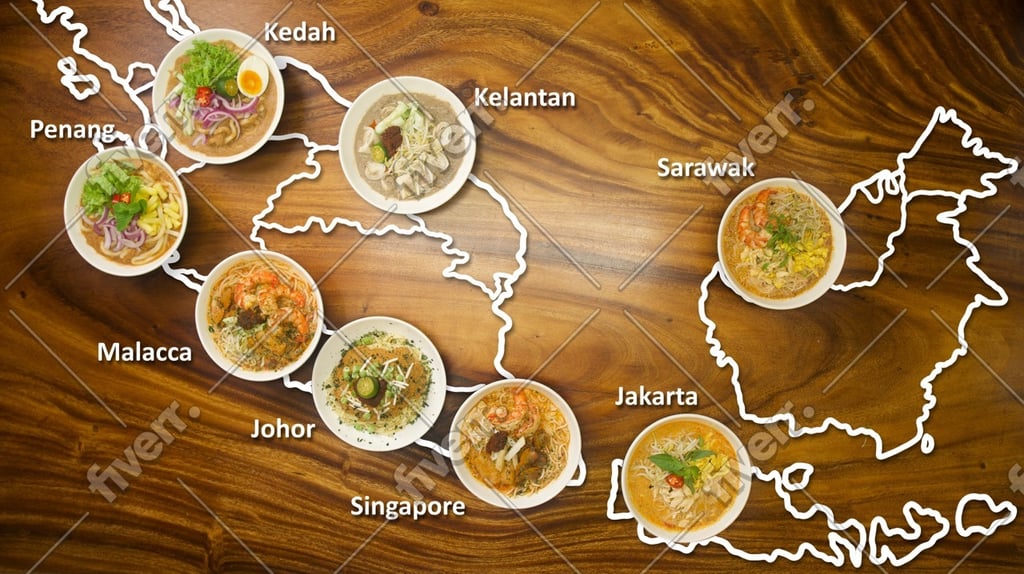
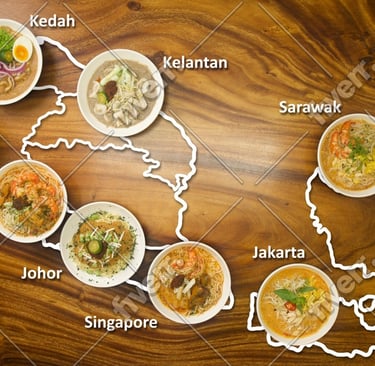
And to highlight each bowl at a time, I basically retook a photo of the table the best I could (same lighting, same time, clean table, same frame, slightly off focus abit to compensate for the focus on the bowls off the table) and I would say I could get 95% there so really happy with the result.
The artist is Khayyam and he is incredibly patient to work with me through like 10 revisions (some big and small changes each time mostly done in photoshop). He also went the extra mile to recreate the shadows synthetically so I could use it on the blank table. It looks close enough for a casual viewer. I would definitely use his services again if I need another digital map next time. https://www.fiverr.com/khayyam_akhtar/draw-black-and-white-fantasy-maps
If you’re new to Fiverr and want to try out his services, you may use my referral link to get some credits to offset your first purchase. https://www.fiverr.com/pe/KGAvvW (I get credits for successful referrals to make better videos next time)
This thumbnail or the final scene is setup by plating each laksa bowl and take a photo. I might as well also give viewers a surprise by digging into each bowl as I talk through my analysis into their differences. It may seem like I made it all on the same day, and I thought of doing so, but it would really be too crazy and not enough time to make it happen. So with the help of freezer technology, I actually froze the gravies of asam laksa, Johor laksa, and laksam, while I chilled the nonya and katong laksa (since they share the same base). I did laksa Utara first since it appears to be the simplest and I could recreate it in a short while on the thumbnail day. Then I did nonya laksa the last so that I could use the base for the finale. So I just have to thaw the other laksa bases and prepare the fresh ingredients and toppings.
Trouble with space
This is probably the most ambitious and largest video file I’ve worked with so far, at a gargantuan size of 5.5 TB worth of footage and rendered files. I don’t know how it got so big, but I’m looking forward to offload the entire project file after preserving some useful bits for future use. My 8 TB SSD is almost full even after moving off lower priority project files to another external SSD. I guess I’m kind of pushing the technical limit of my system already and I should either cut down the script, or upgrade to a bigger machine (which still doesn’t really make sense at the moment).

Post production lunches
So naturally I would have lots of leftovers from making so many types of laksa. On editing days, I would just reheat laksa soups and dump in veggies and noodles to make a quick meal. It’s mostly just cabbage, cucumber cooked till soft in the broth, then top with coriander leaves, or minced ginger flower, and some leftover fishcake (which I almost never buy but just for Singaporean laksa…)
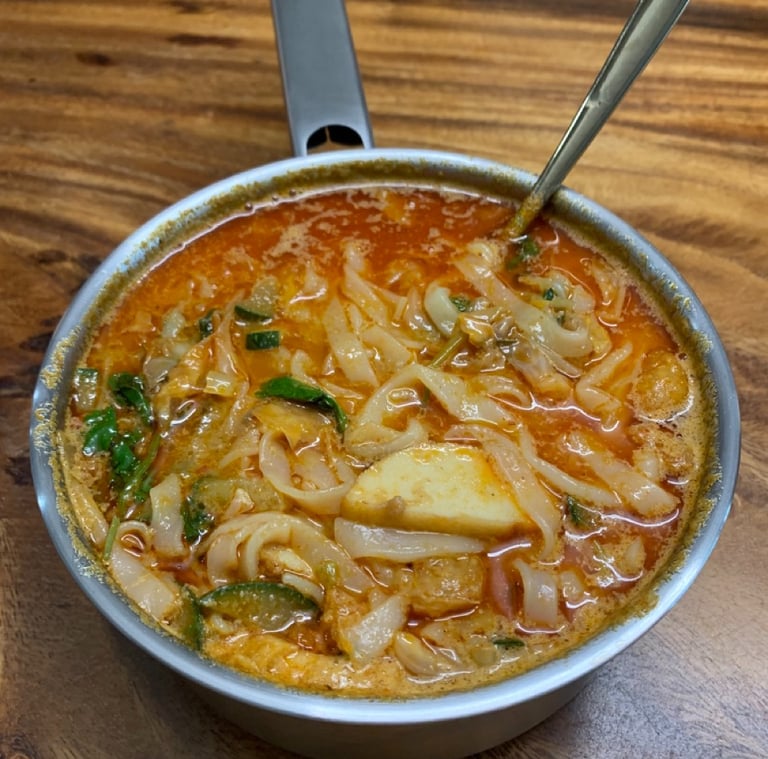
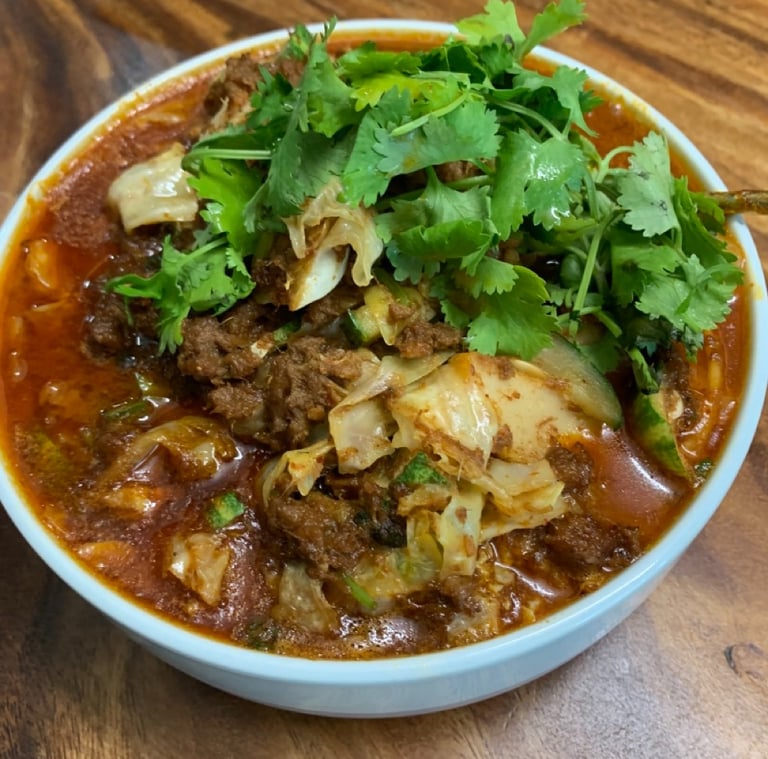
It started off as eating off the pot, to bowling up because the pot couldn’t fit the noodles. This is like 2-3 portion size but I’m a big eater and like lots of veggies so I usually finish 80% of this first and another 20% about an hour later.
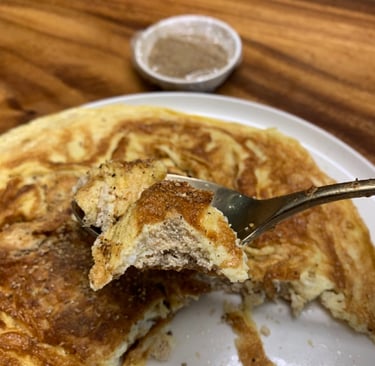
I made an egg omelette with fish egg dusted with plenty of sarawak peppercorns to bring out more eggy aroma. Nice I think I might have invented my own egg omelette and fish egg dish.
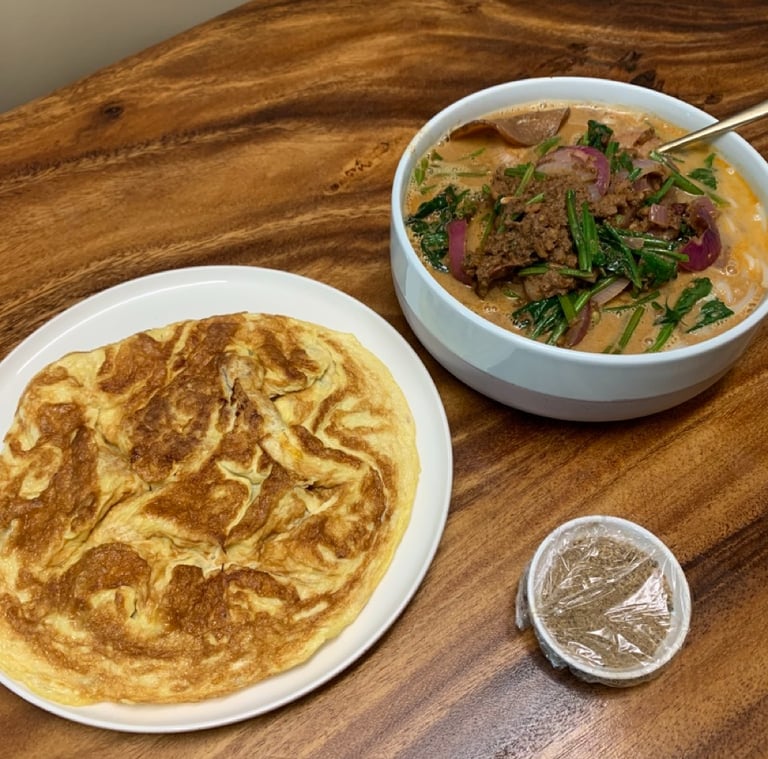

By using asam keping in my soups, I realise it actually swells up pretty big and it’s actually not as sour as before because it has gone into the soup. The peel is edible and kind of has the texture of cooked pears or cooked cucumbers sliced thinly. It has a bit of a bite but not much, still quite soft overall due to how the fruit was boiled.
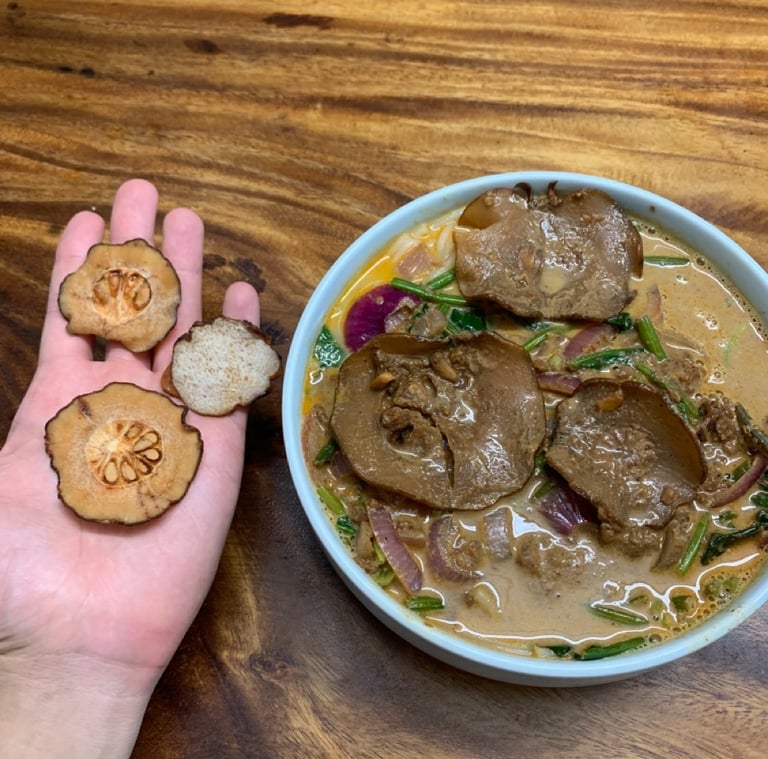
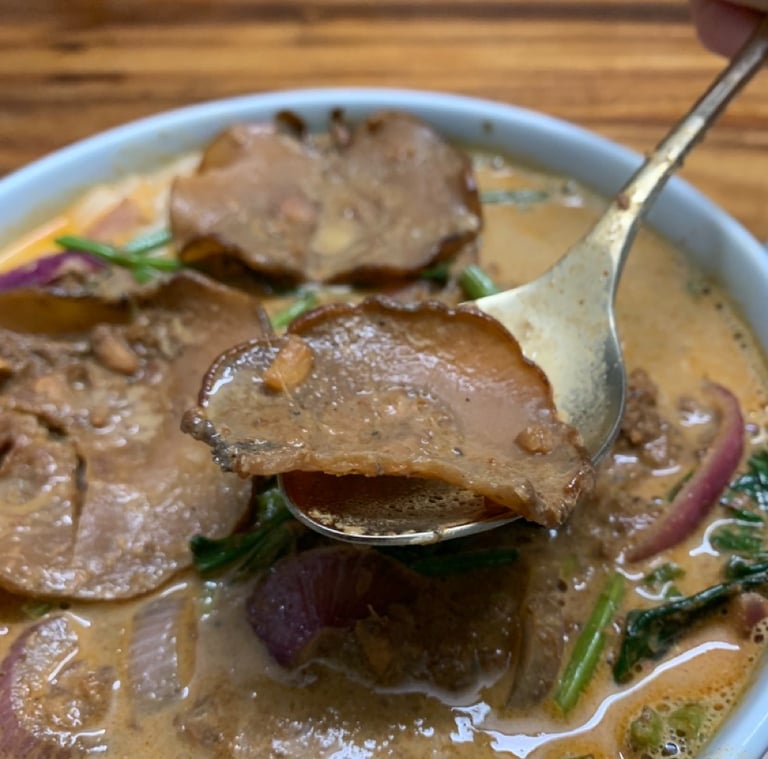
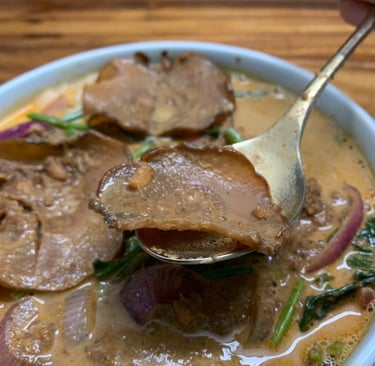
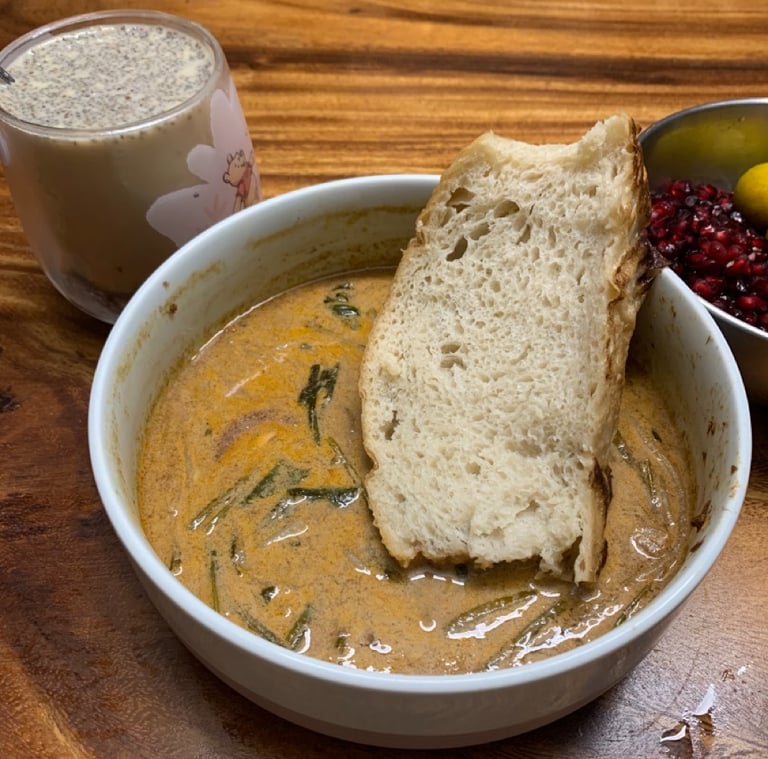
How about sourdough with laksa? Not bad actually. I steam my sourdough slices to soften it so it could soak up the broth. Yummy.

Why only 8 laksa?
When I was doing research on this topic, I found dozens of laksa types on wikipedia and some popular ones discussed on reddit. I also found some based on google maps, like this Laksa Sarang which appears to be a fried egg omelette on top of a laksa bowl. That fried egg omelette would be a nice “sequel” to my fried rice recipe where some comments from Indonesia about making a fried egg skewer by twirling the fried egg with a stick. This Laksa Sarang is a wide shape fried egg omelette that looks really interesting too.
But I only discovered that late in post production so I figured I can’t do all of the laksa types in the world and fit it into a 20-25 mins video. So there’s bound to be some comments about hey you should do laksa XYZ too, hence I reasoned at the end that these are the more commonly consumed laksa around the region. Also, 8 is a nice number yeah.
eg. Laksa Sarang Tok Jembal found out through google maps
https://www.reddit.com/r/malaysia/comments/bvjyfz/siapa_suka_laksa_time_for_sejarah/
Cheesecloth for squeezing
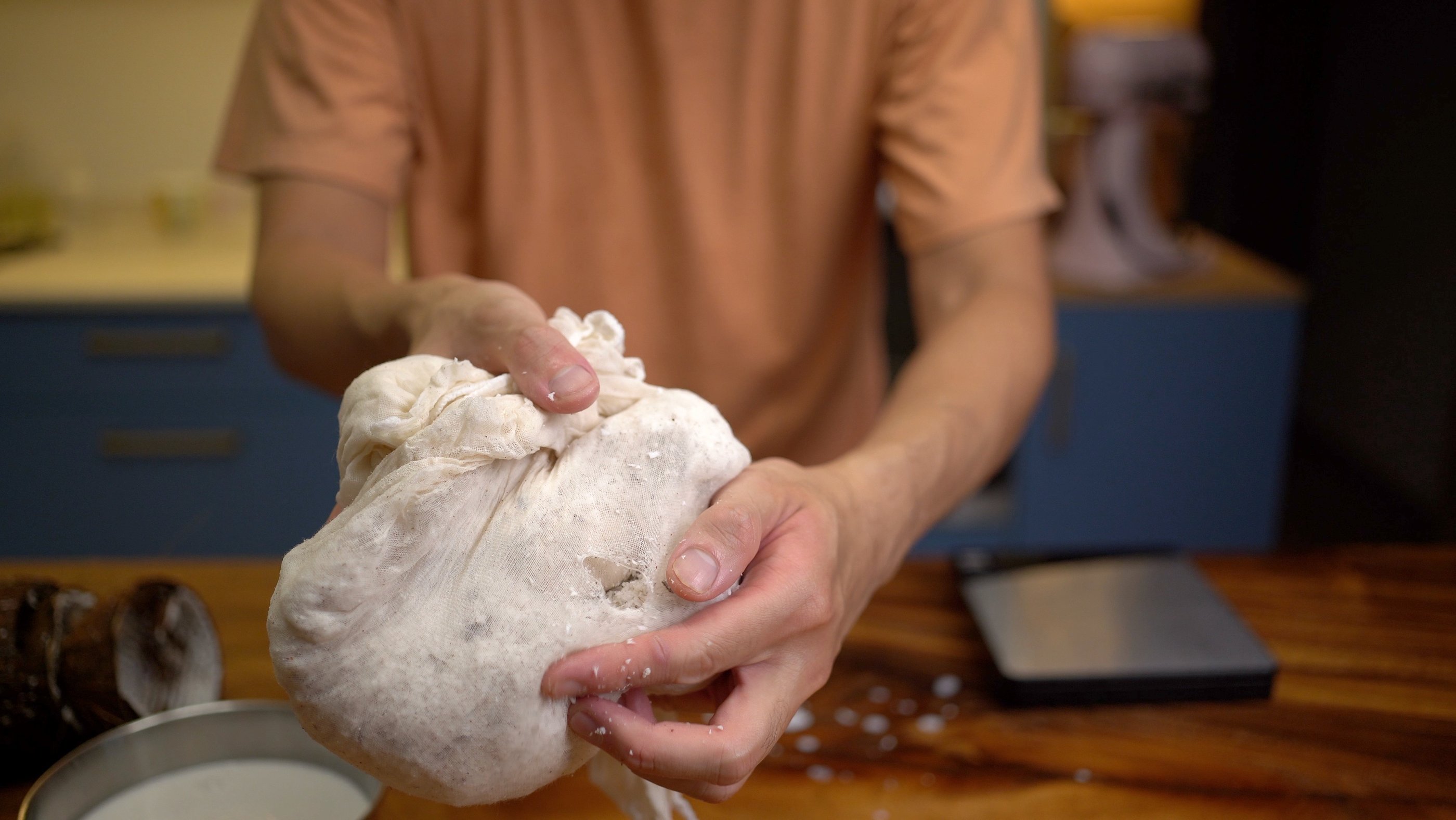
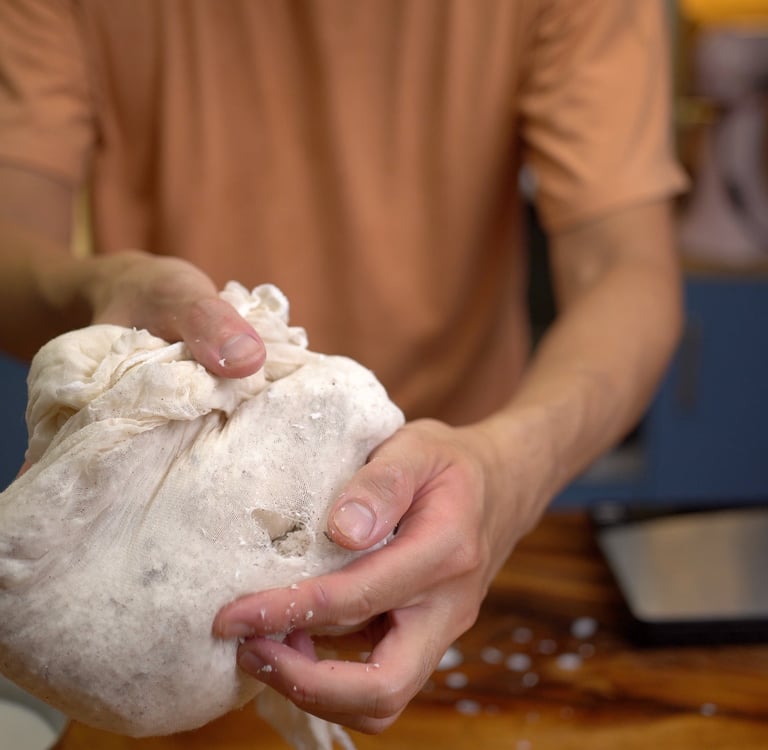
While I used a cheesecloth for squeezing the coconut milk, it actually tore under stress. But after I double layered it by folding it into half, it did not tear anymore, so it has to be used at least double layer.
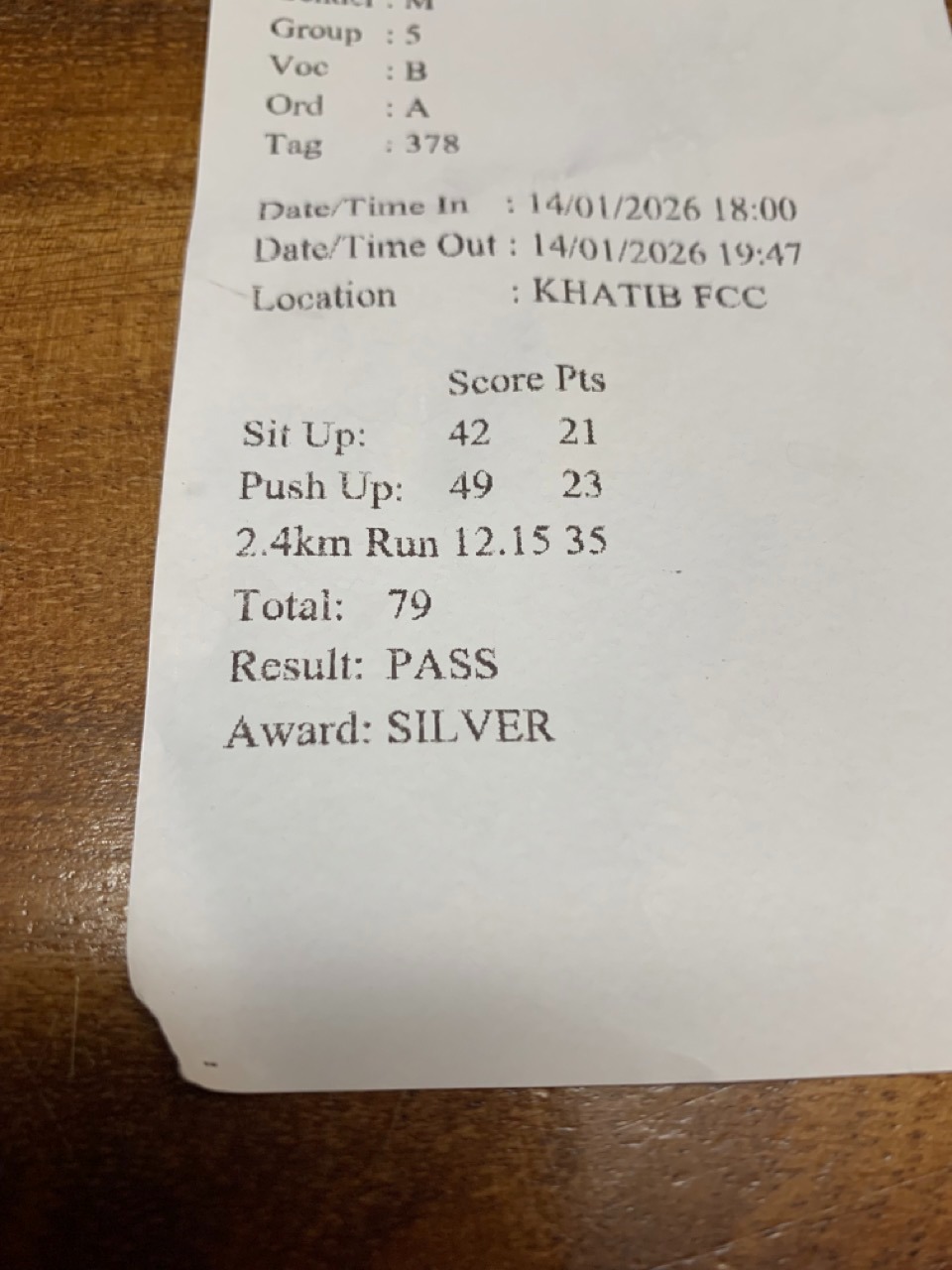
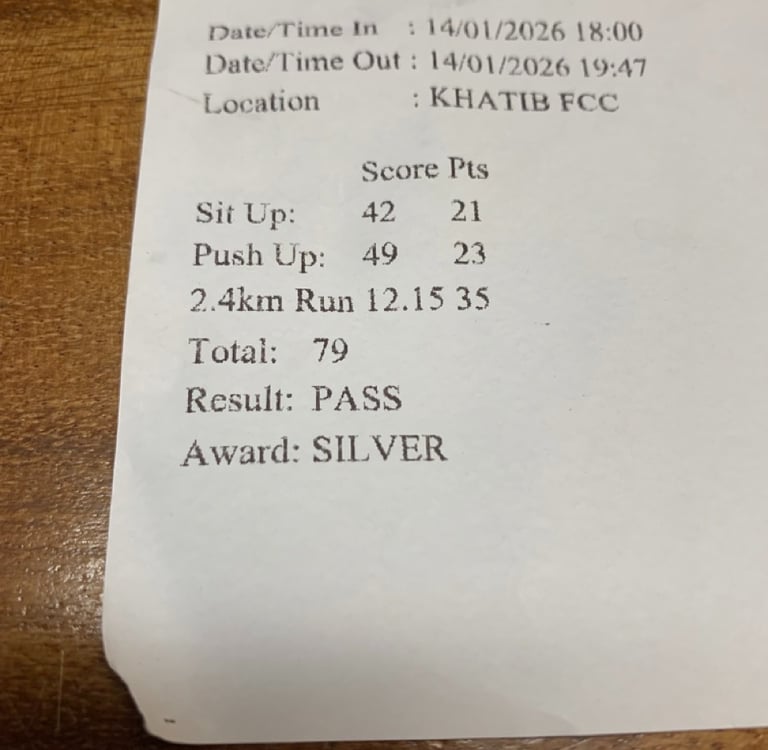
I think my grip strength was too strong so the cloth tore, and just to give you a perspective on my fitness level, I just did my IPPT (army fitness test) since my birthday was around the corner (so I just train once to do twice...) and I still managed to maintain a decent level of fitness despite eating laksa many times.
Cut my finger
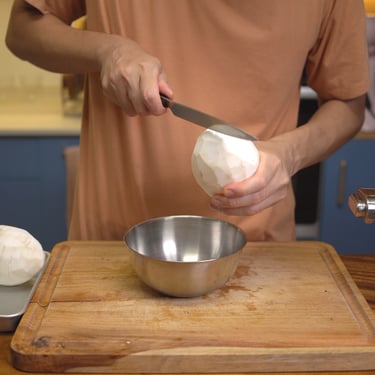
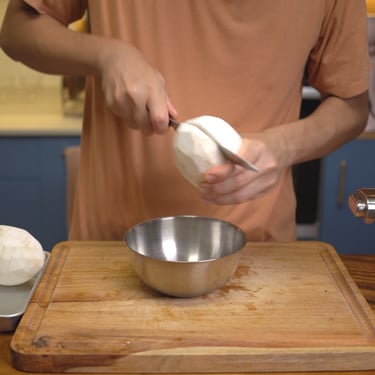
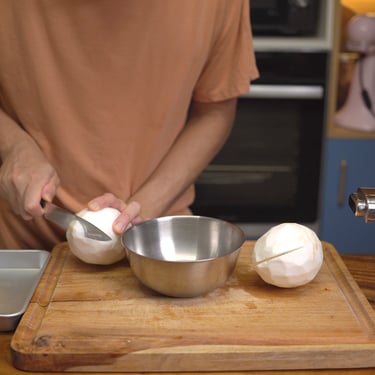
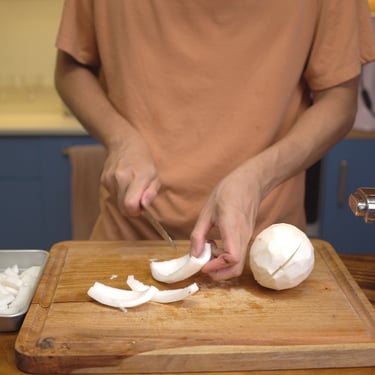
I also accidentally sliced my finger due to wrong coconut cutting technique. I initially wanted to hack it open by doing a light tap but didn't expect the blade to just slip right through. Really painful lesson learnt not to cut it open like this. It's quite a deep cut like 2mm - 3mm which I tried to glue it back together using a skin cut glue. You can see a bloody finger while cutting the rest of the coconut which I tried to wash off. In the actual video, if you zoom in, you can see a slit on the finger at around the 3:15 mark While the coconut flesh is hard, but slicing it in a certain angle goes through smoothly, so a better way is to angle the blade away and slice off just the top to make a small opening.
Second round stocks
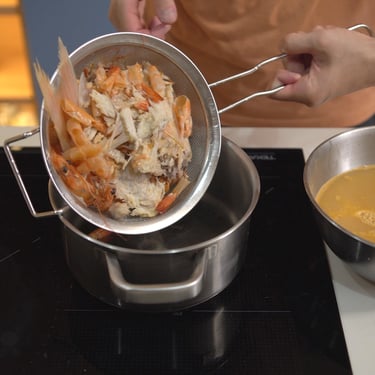
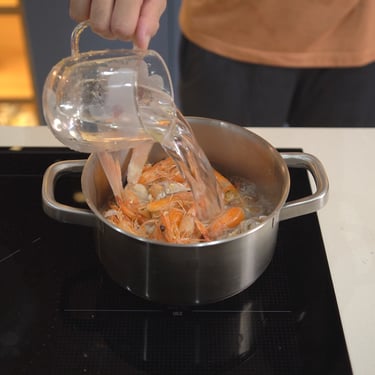
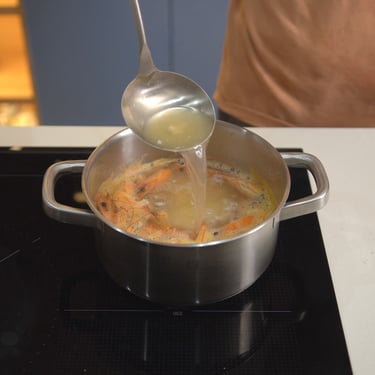
We did a lot of soup stocks in laksa by cooking bones in water, and actually they could still be cooked a second time for a lighter broth that's still good enough for soups. The first stock is of course thicker in flavour and colour, but the second stock is not too bad also!
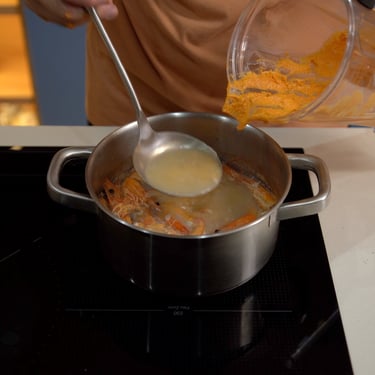
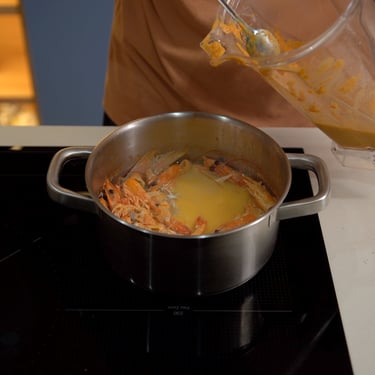
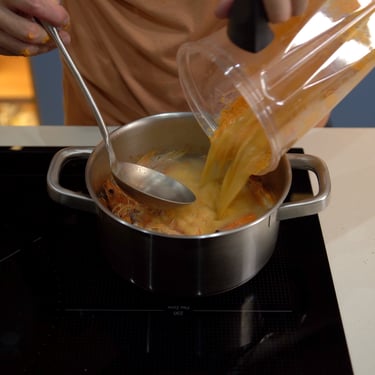
The blender could also be washed with stock to use up as much ingredients as possible to minimise wastage. Just scoop some soup inside, give it a shake, then pour it out to make a flavourful soup.
Recording sounds
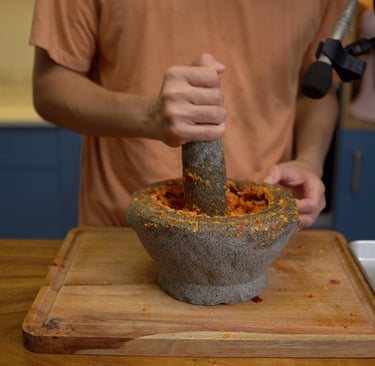
Audio is half of the video experience, so I try to capture high quality sounds by using an external microphone to capture the mortar and pestle pounding and coconut grating. The sound is captured separately, then synced with the video in post. Capturing sounds is quite challenging at home because I don't live in a quiet area. Fighter jets fly by often (people who live in Seng Kang or Punggol know...) and are so loud that I couldn't even hear myself talking on the phone. That's why I feature very limited sounds in my videos and at most they're just ambient sounds straight from the camera.

About this BTS
A quick word about writing up this behind-the-scenes post (which is actually a collection of interesting points I wish I could include in the video but can’t due to time). As I eventually want to do more shorts or reels, I’m practising shooting almost spontaneously at a moment’s notice to capture impromptu events but still valuable sharings. I try to sieze the moment because it would otherwise be more troublesome to set it up in future or I might not encounter it again any sooner. So anyway this post contains a lot of spontaneous shots and epiphanies that I write down to hopefully help someone along the way. I see myself as like a beginner stepping to an intermediate cook so I’ve encountered the issues a beginner would face. So I believe what I share would be valuable to most beginners out there that make much most of the internet traffic so I think it’s a nice win for everyone - I get to practise shooting shorts and capturing spontaneous learnings, while people enjoy getting their curiosity satisfied with a behind-the-scenes view.
If you've read till the end and have further questions, feel free to start your comment on the video with "Laksa Bon Appetit" and I'll write back as soon as I can.
Subscribe to stay updated
Subscribe to my free newsletter to stay updated on new posts. You can unsubscribe anytime, no hard feelings.