Malaysia Trip 2026 reflections
LIFE LESSONSYOUTUBE INSPIRATIONS
5/16/202612 min read
I recently went to Malaysia and learnt a few things about the food industry there and also a little bit more about myself.
Malacca does have quite a lot of good interesting food too. But best not to visit on a Monday or Tuesday because many eateries choose to rest on these days as they mostly operate on weekends crowds and tourists.
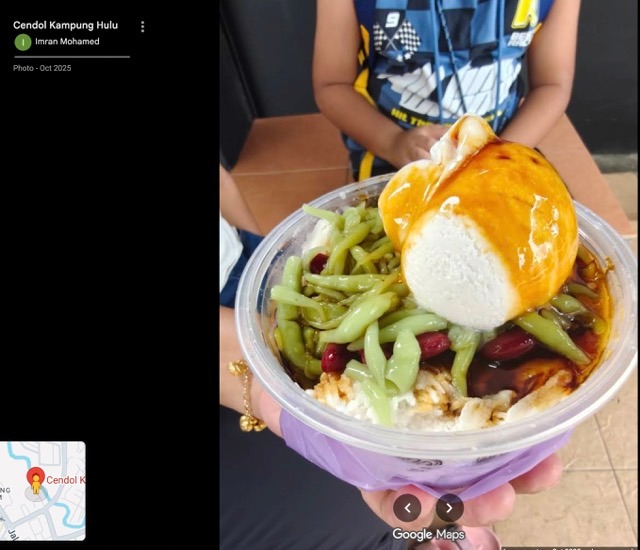
In my experience so far, tthe best food places also often don’t correlate well with Google map ratings or reviews. At best, there's a weak correlation. The good places tend to have lots of reviews because people have discovered them already and business is brisk to keep feeding the crowds. But some places get crowded out from other establishments that game the system by offering freebies for good reviews. The real signal in my opinion tends to come from word of mouth by asking shop owners of the food that we like and trust for further recommendations. For example, I was looking for the best cendol in Melaka and came across this highly raved place in Malacca. Over 6000 reviews and overall rating of 4.2 suggests this is a really popular place and it really is. But the taste isn’t as rich as I hoped.
https://maps.app.goo.gl/ow71aT8tvKcZtKzR6?g_st=ipc
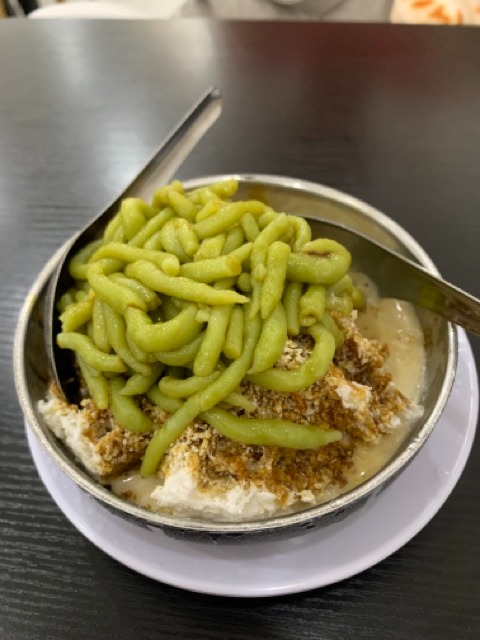
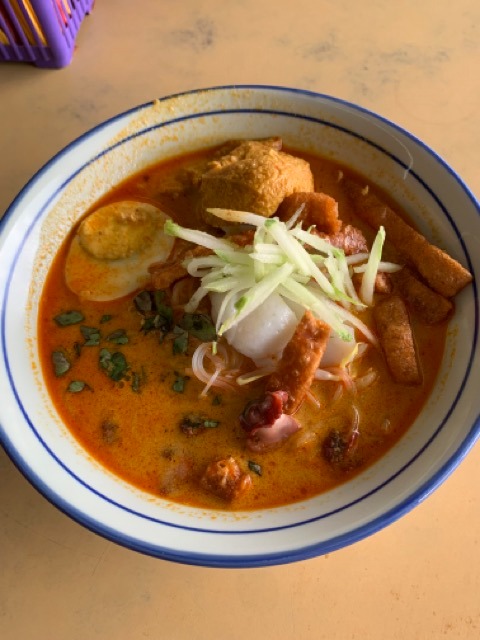
meanwhile, this place came from a recommendation of a laksa place that we tried and thought was quite good. They made an effort to present it nicely with finely sliced cucumbers as garnish. After slurping up the laksa for lunch, I asked the lady boss where's the best cendol in town. The lady pointed us to the cendol just around the corner was excellent. Freshly squeezed santan, proprietary blend of sugars in Gula Melaka syrup, and self made cendol make this a standout. Though the chewy cendol isn’t for everyone, but the overall dessert is so much more aligned to what I was hoping for. Yet this place only had less than 100 reviews with a decent rating of 4.5 too. Suchplaces show up on Google map as high ratings but few reviews as they don’t get as much attention from the public, which is ironic. Maybe there’s huge gatekeeping in place.
https://maps.app.goo.gl/8GTmf1io8P7fLNyR7?g_st=ipc
So my conclusion is that while popular places on Google maps are good, the reasons are not always about the food. It could be, but it could also be because of the location, or the vibes, or something else other than the food.
Food in Malaysia is often compared to Singapore and there are staunch supporters on both sides. I believe when food in Malaysia is good, it’s because it benefited from the lower cost of labour so the owners could hire more workers to do laborious tasks that make food taste better. Whereas in tight spaces of Singapore, this observation is also true in my experience eg. Cantonese delights noodles at Hong lim food centre versus other generic wanton mee that outsource their char Siew production. But the owners are involved in the labour themselves so they don’t have an army of labourers to work on food.
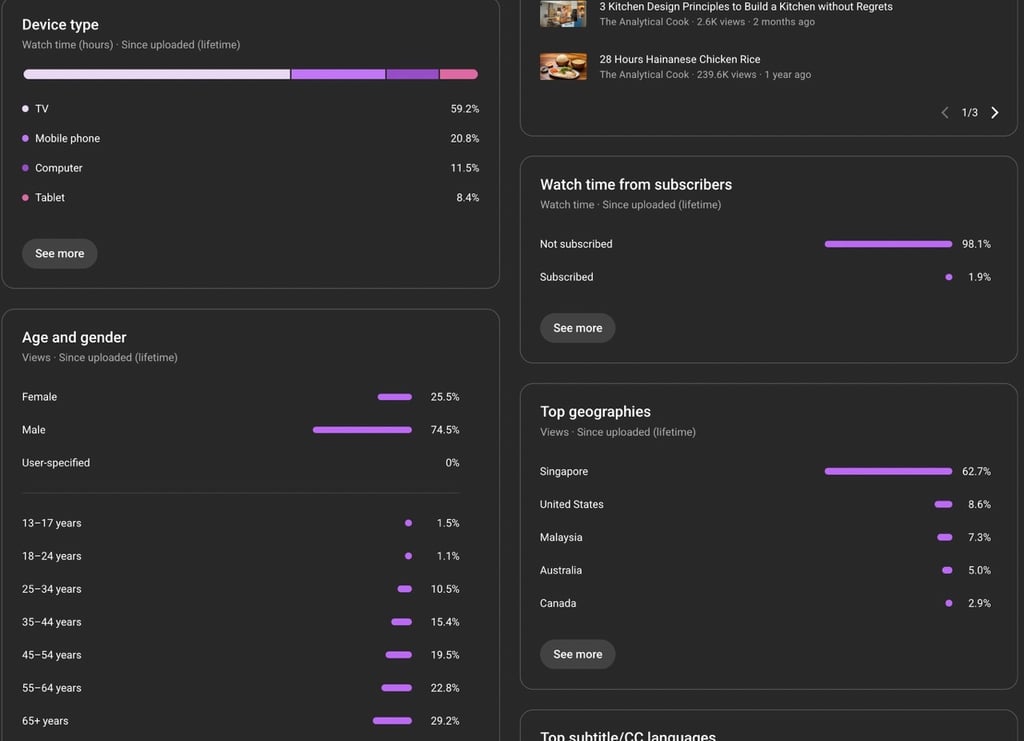
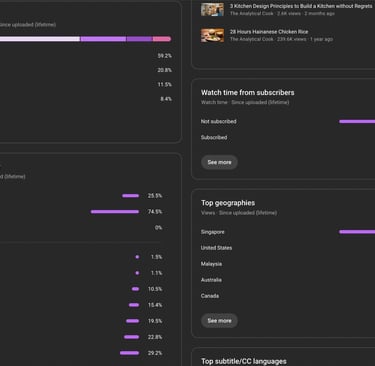
A quick word about the performance of this recent video. I was really surprised by the amount of attention and views mostly came from TV screens of Singaporeans of the older generation! Usually the curve for the age and gender peaks around my age group, that is, 25 - 34 years old and mostly males. But this time, the curve is highly skewed towards the older generation who probably enjoy watching old school food made the old school way, which is really quite therapeutic to watch. I thought this would probably only get a few thousand views from Singaporeans, but I guess this is the type of traffic other popular street food channels get, like SoYummie, HappyCat.黑皮猫
I initially made this video mainly because I wanted to see what it takes to make those types of behind-the-scenes videos of street food, and I was genuinely impressed by the wanton mee when I first ate here, and I'm generally the curious customer who peeps into the kitchen to see how food is made in restaurants, or watch Din Tai Fung chefs fold the xiao long bao many times while waiting for mine to be served. Turns out the video was quite tough to shoot and edit. To shoot already demands a crazy schedule of sacrificing sleep (napping in the evening helps, but I still felt huge fatigue around day break time of 6am-7am, similar to what I felt during army days of all nighters in the forest).
Anyway, adrenaline carried me through to shoot what I could, and I managed to get a hang of it by shooting multiple angles of every task. Like for example, when making the dumplings by hand, Linda the lady, did hundreds of dumplings. Since there was just only me and 1 camera angle, I captured different angles of the same task, so that in the editing stage, I could do a match cut and make it seem as if there were multiple videographers to make each scene much more interesting to watch with various angles. So I had to really accompany the owners through their prep phase to capture as much footage as I could.
Then when it comes to the editing stage, I first rearranged the footage in sections of each type of food prepared. In reality, they prepared the food simultaneously, so in real time, Linda was doing the dumplings outside the stall, while Norman was doing the char siew in the stall at the same time. From a presentation stand point, it would be too confusing to jump back and forth between each food, so I rearranged all the footage of the dumplings consecutively, and the charsiew in the next section. From a viewing perspective, it makes sense more sense to see each component of food prepared from start to end. That takes organisational skill to arrange the footage first, then cut down the interesting bits, and smooth out the cuts with matching frames that flow naturally.
Then I overlay a voice over commentary inspired by David Attenborough's Nature documentaries. This is again a departure from my usual style of cooking videos where almost every second is a voiceover. Now I had to learn how to let the footage breathe to let viewers immerse themselves in what's happening on screen, kind of like those natural documentaries where we just watch with awe and admiration. Turns out that how Sir David narrates is an artful skill too, like how the intonation goes up and down and up to trigger our interest. I'm still studying this art and hope to make more videos like this, since there's a clear demand for it, and I could do it. Now it's the number 1 performing video, beating my 28 hours chicken rice, but to be fair, they are in slightly different niches. One in home cooking science, the other in street food documentary.
Such food documentary videos are actually rare to come by. It's not every stall that is so popular. There are only a handful out there, and the engagement is generally low, because people who watch on TV don't comment. While I was travelling, in one hotel we stayed, the TV had YouTube, so I tried watching some videos to experience what it was like, and there is no comments section where you could read the comments while watching the video. It's really just the big thumbnails and titles on screen, and immersing in the video totally. Once it gets boring or feels off, I would reach for the TV remote to go back to the home page for other videos. It's interesting to get a feel of the dynamics as a TV YouTube viewer.
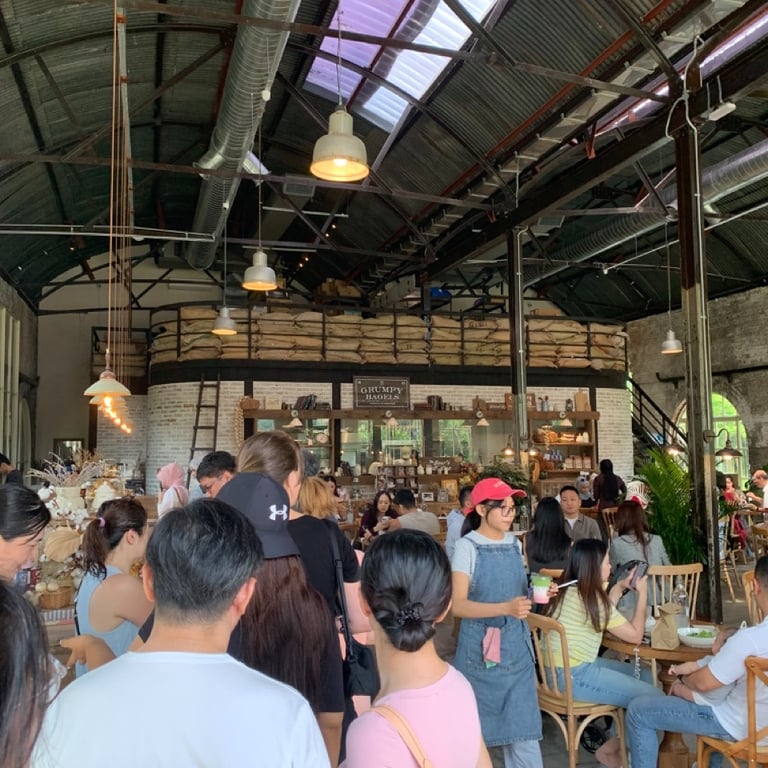
I also managed to bump into Zynsin or Claire, founder of Grumpy Bagels. She was really polite and patient to talk to me despite being busy with fulfilling an order. I asked if she is interested to do more videos and she said yes but no time. It’s not the first time I heard this so I should definitely come up with a good response to that, like I could share with you a video production system that lets you maintain creative control without taking up too much time. I also praised her decision to create the window to showcase the bagel production, whereas the original venue had the kitchen behind a wall. She then shared briefly how she makes the bagels from the proofed to a fridge that’s customised to fit racks of bagels. I passed her my name card and she said she would get her social media team to have a look. I wish I had wrapped up the conversation by asking if Instagram DM is the best way to contact her, which she hesitated for a moment before saying yes. It could be better by leaving it open and asking what’s the best way to contact her instead. Overall I should keep all comments positive but not generic like oh I love your shop etc but more insightful by saying what I like about the bagels, like it’s more chewy than bread and has really good flavour and texture of a high protein flour. I should also ask owners if they have any concerns about me filming there to check for any reasons for rejection.
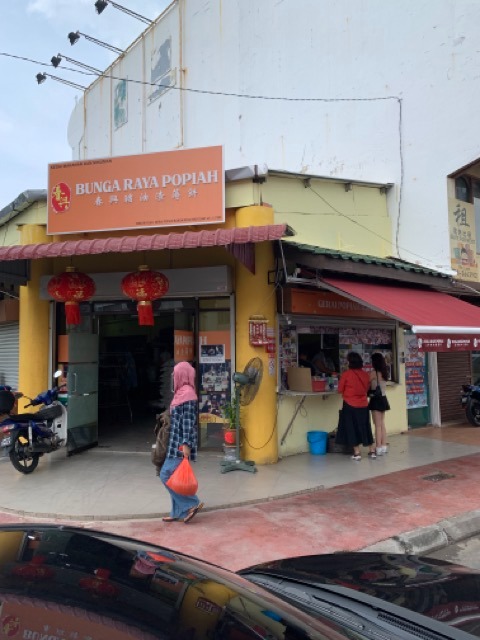
Anyway, that's a massive detour from my trip reflections. So back to Malacca, I tried this popular popiah place. I wanted to try another recommended by a Malaccan Chef, https://www.instagram.com/malaccamakanking/ , but the place was closed on Tuesdays, which I forgot to check on google maps because I assumed they would be open! Lesson learnt... https://maps.app.goo.gl/34WhXG9uQKWAP65V8
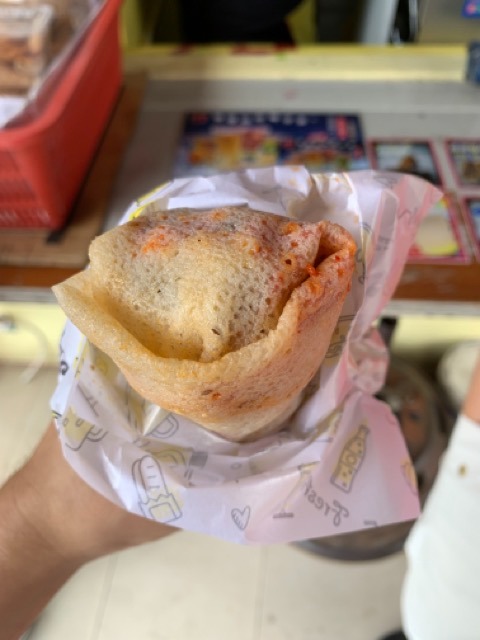
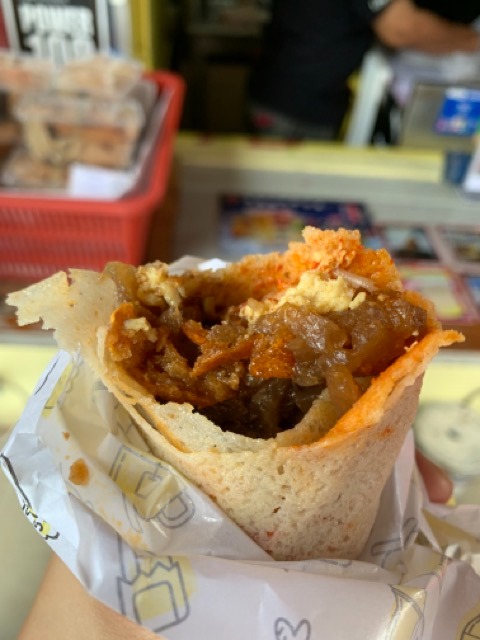
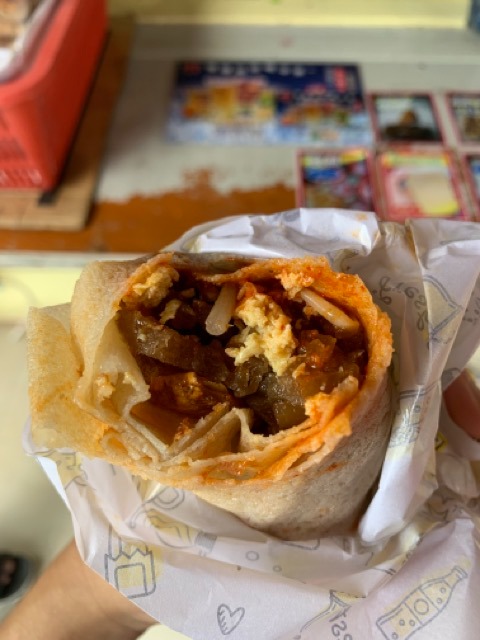
But anyway this most popular place according to google reviews is not bad. Alan the Malaccan Chef said it's overrated, so I got to try the other one next time, but to add on to my theory about places with highly raved google reviews, there are generally good reasons, and it's not always about the food. It could be about the ambience, the vibes, the free gifts for reviews, etc. and occasionally, the food.
This one is likely about the food. There's very casual vibes in this simple shop, and I was lucky to visit during the off peak time, because according to the chatty fatty owner, Popiah Wang (king in Chinese), he said that during a recent long weekend, the queue stretched three shop lots with over an hour waiting time, and there's even a sign to say maximum order of 15 pieces per person, so that's probably true. Anyway I picked up a phrase from him. He said he does not 偷工减料, or literally reduce labour, reduce ingredients to simplify food production, usually by using industrially produced, ready made sauces to churn food out faster while sacrificing food quality. The use of msg or chicken powder is one of the usual suspects. In this popiah case, I could taste that they really put in effort to make their pork lard from scratch, and somehow make it super thin and crispy, which I still wonder to this day how they did that. The braised sauce is also tasty and tastes homemade.
In general, I still see more good food places in Malaysia, but they are more distant apart from each other due to how the infrastructure is dispersed across the land compared to Singapore where everything is nearly connected in a relatively small city. So while the good places in Singapore appear concentrated on a dot, they are still spaced out from the Singapore island perspective, like there’s a good wanton mee in the industrial west too (laifaba wanton mee) and also Ponggol nasi lemak in prime residential areas.
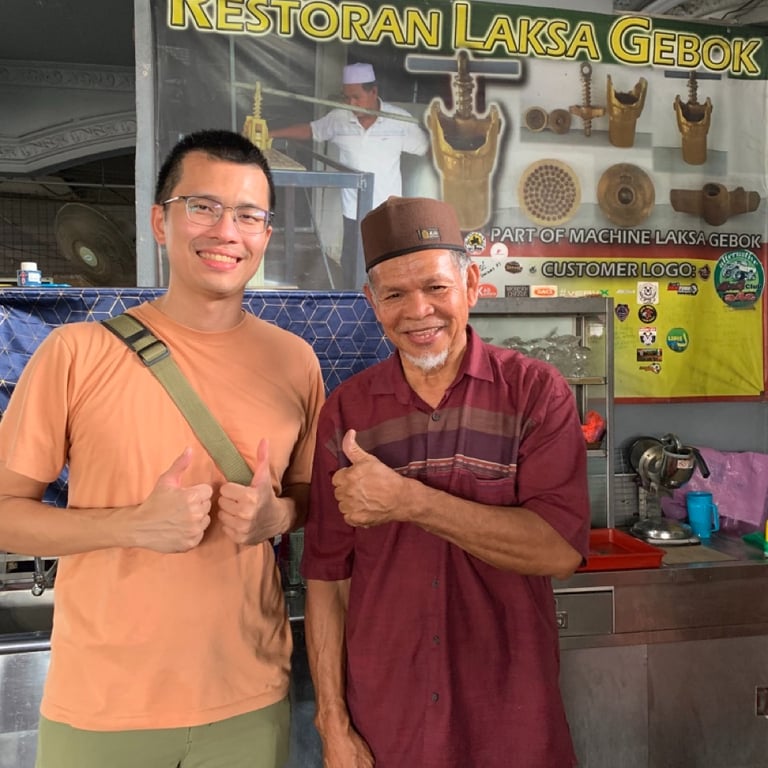
We also visited laksa Gebok and it was mostly empty. Yet the food is yummy and the fresh noodles have a better texture than factory made noodles. I notice they make their noodles by squeezing the dough through a yellow metal can with holes on the bottom. It results in a slightly rough texture that helps sediments of the gravy to cling onto the noodles, as opposed to fresh noodles which are almost perfectly smooth so it wouldn’t do the same. The owners were incredibly friendly and hospitable and were eager to work with us to promote their business via social media, after they learnt about what we do and why we were here.
I told them I visited this shop as recommended by my viewers and it indeed didn’t disappoint. But somehow I felt like I wasn’t fully committed to making a video for them as I only thought of including a small segment in my video about making fresh noodles for an enhanced bowl of laksa. I got some Broll for that and it’s quite a long way from Singapore to get here. There aren’t many people here in this state located in the middle of KL and Kuantan.
I reflected on why I felt this way and maybe it’s because I was chasing clout or fame like many crowded restaurants I’ve been to. But maybe this empty restaurant is the kind that I should help and they would be eager too. I could hone my skills this way too instead of just going for crowded restaurants that wouldn’t need much further marketing. They start making their fresh noodles at 7am and laksa sauces at 6am. As I was going camping the next day, we wanted to catch the sunrise and do other activities at the camp site, so we didn’t do the filming in the end. I treated this as a recce trip to scout the location and test out the food before it’s worth doing a full film.
In the end, I decided to do a short video with him about his signature dish, Patin Tempoyak, and made a short Tiktok video about it too, since I heard that Malays in Malaysia watch Tiktok more than Instagram. https://www.tiktok.com/@theanalyticalcook/video/7640016746186853652
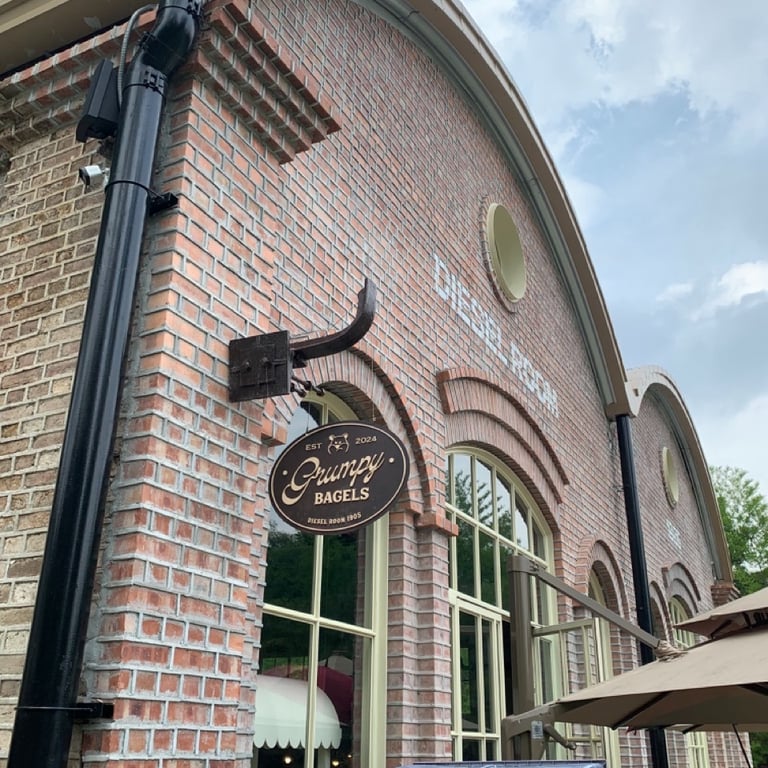
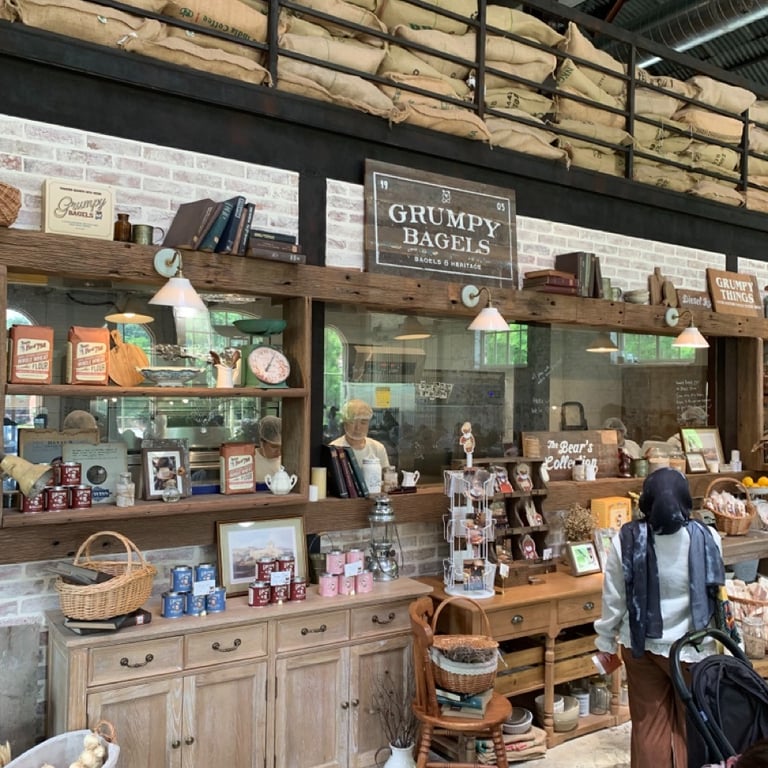
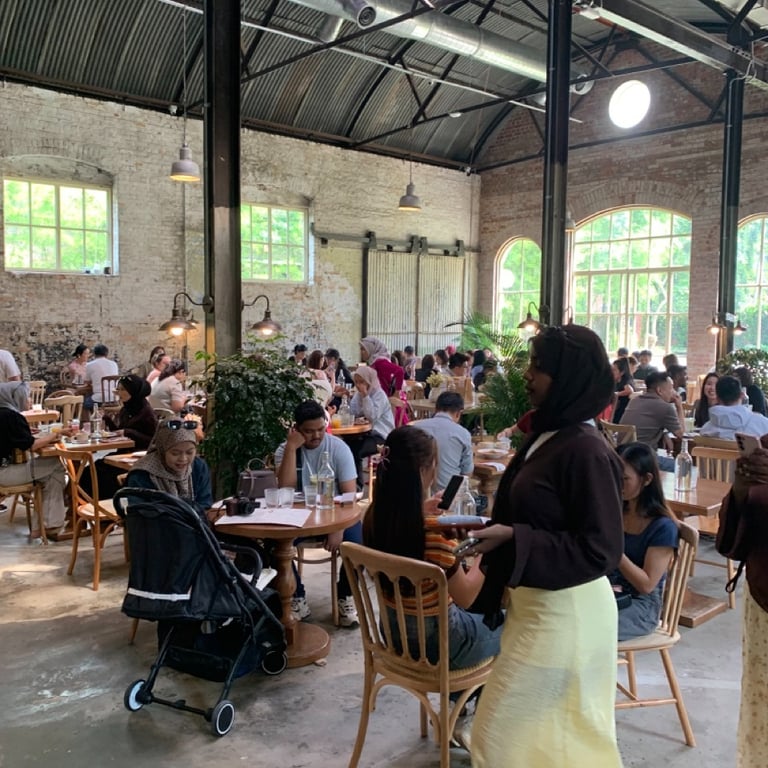
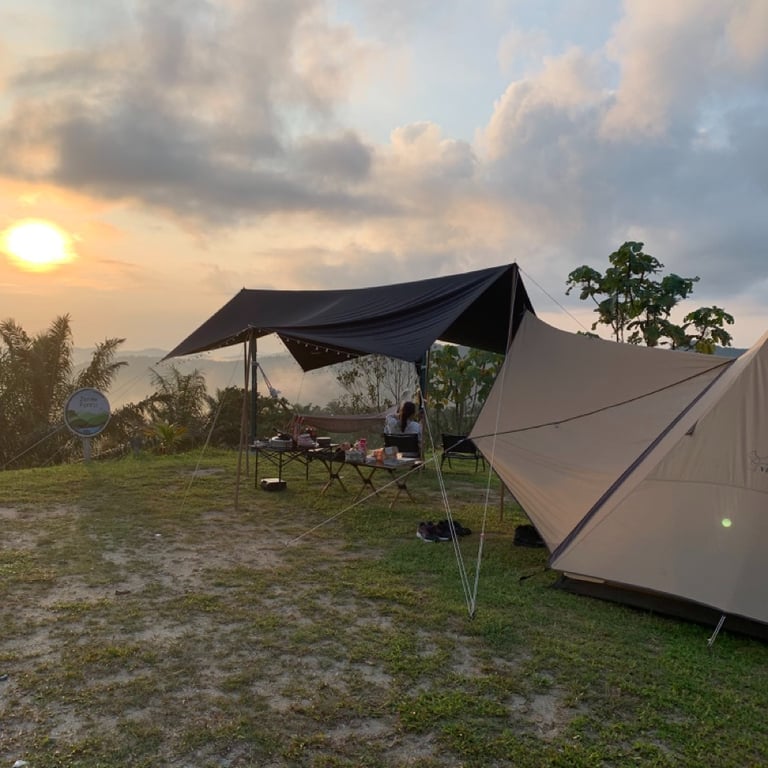
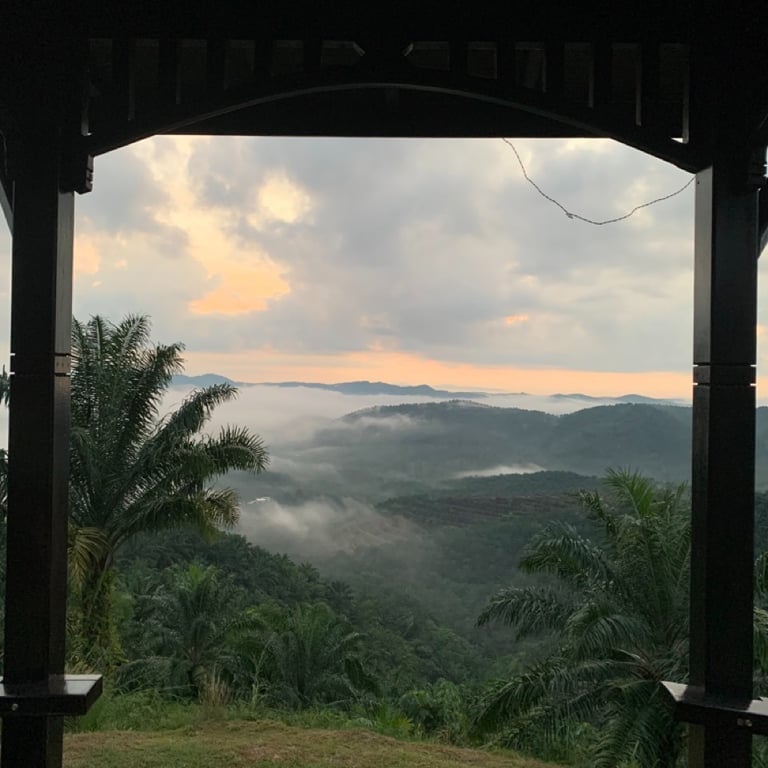
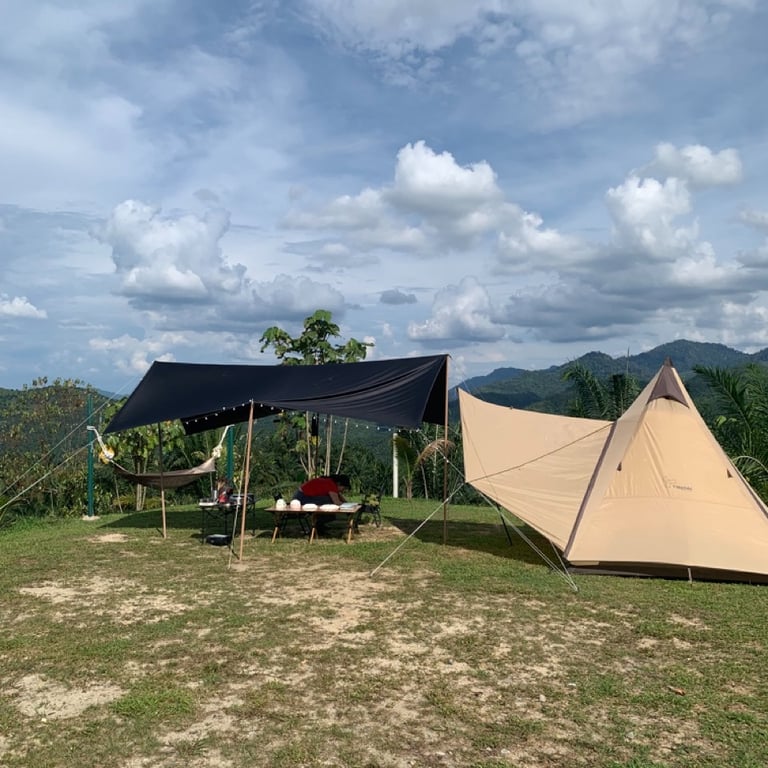
I thoroughly enjoyed the campsite because we get hills, clouds, and river all in one location. The camp site is clean, comes with bathroom with plumbing, and a natural river that we could take a dip in. The water is surprisingly cool and it’s a natural jacuzzi by sitting on a rock and letting the rapid waters flow on us. We can feel the force of nature that’s relentless and powerful as the waters gush on us endlessly. The sounds of flowing water also adds to the experience. The rocks are big and small. The ones in the river are not visible so we had to feel our way on all fours to find a good spot to wedge ourselves against the rocks against a rapid flow of water to enjoy the natural jacuzzi.
We also did an oil palm harvesting activity and it’s incredibly difficult to literally pull it off. We were given a long and heavy metal pole with a parang attached on the head, so to get to the palm fruit, we have to first cut off the covering branches by sawing up and down, or pushing and pulling the long pole. It’s super tiring as we didn’t have the same level of technique as the professional oil palm caretakers. They are incredibly strong, weighing only 60kg, yet they could lift and carry an oil palm bunch weighing about 60kg, basically carrying their own weight! I couldn’t lift it with the pick alone.
These workers are also paid just RM4 to lift and transport one bunch of oil palm. They have a quota to hit every month, 50 tons, or around 1000 bunches monthly, so that’s around 33 bunches in a day if they work everyday. Then they get paid about RM4000 which they split among themselves, usually a pair of workers. They could work on their own free time but they have to hit the quota, otherwise their salary would be affected. Now I have a new found respect for palm oil and the amount of work it takes to harvest them by hand. In these slopes, it has to be done manually unlike flat ground where machines could be used.
A video idea I thought of is to show a day in life of a palm oil plantation worker. We see lots of palm trees on the sides of highways, but hardly see the hard work behind what it takes to harvest the fruit. It would be cool to see the end to end process from palm tree to palm oil to better appreciate where this vegetable oil comes from.
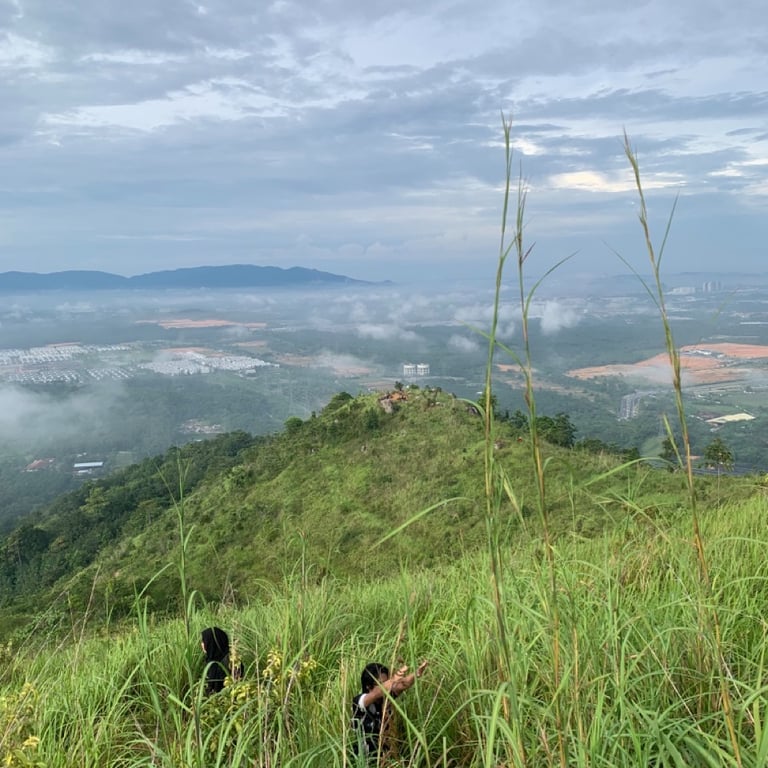
We also went hiking at Bronga hill and it’s surprisingly difficult as the steps are very steep and the terrain is quite muddy and slippery. But I learnt that as we just take one step after another, we can eventually reach where we want to go. At any point, we definitely faced difficulties of finding the next spot to step on, but with patience and consistency, we can achieve what we want in life too, like making a video, building a business, or growing anything in general.
Another video idea I thought of is to do the X natural wonders of Malaysia. Given how I’ve explored so much of it, I would like to show the world the elements that people must experience to appreciate what this land has to offer.
I’m also grateful that we chanced upon the district conference of the church in Malaysia. We met some friends and had a good time eating and chatting at a place we wanted to check out anyway.
Overall, it was a really fruitful trip and I was lucky to meet the founders of amazing handmade food and learn so much from them. There's so much more that I encountered, but somehow I don't feel motivated enough to make a full video or even blog about it. Only when it becomes so interesting that I want to tell the whole world about it, that I would go through the trouble just to get the message out.
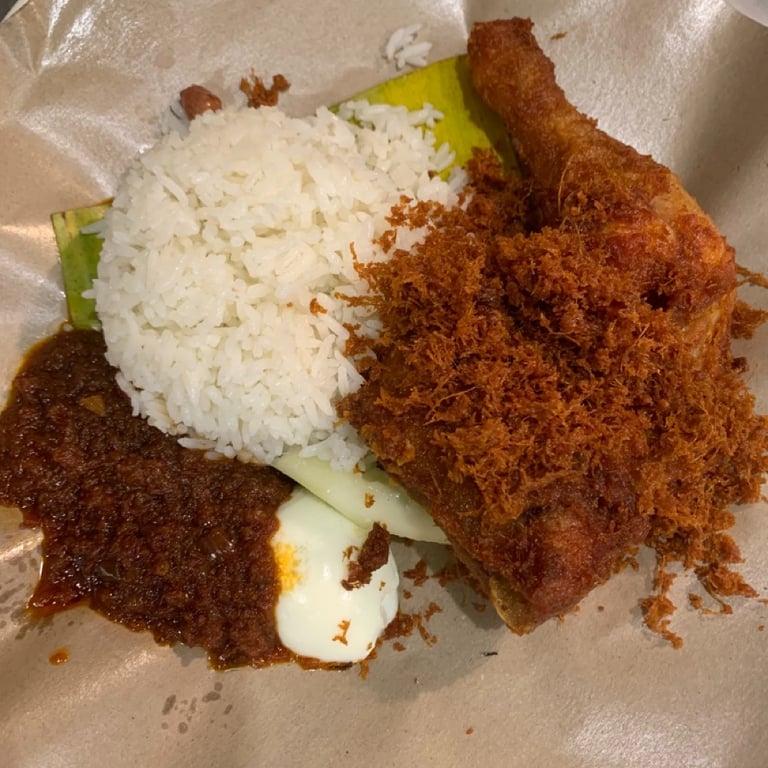
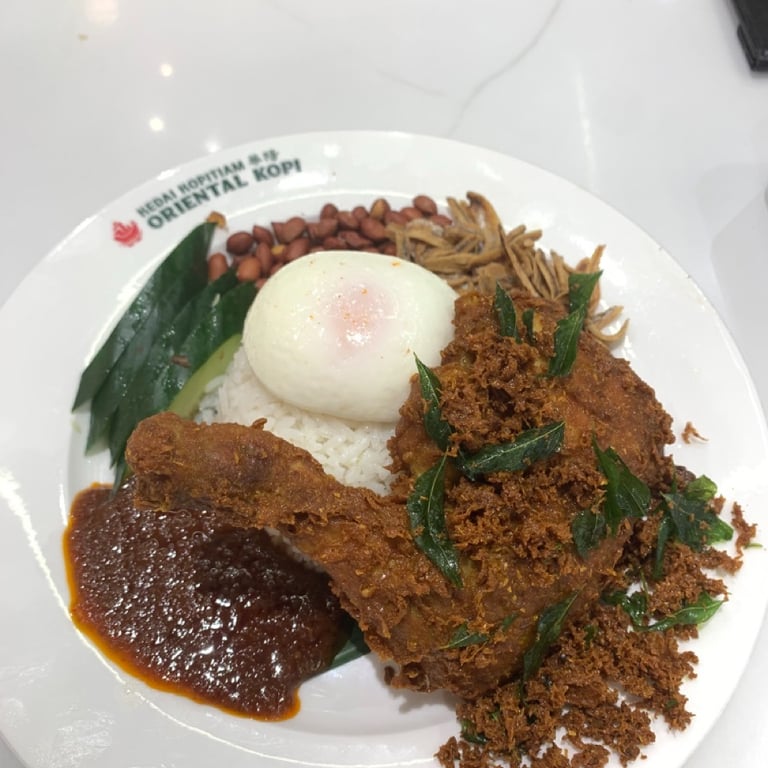
One last thing I compared was Oriental Kopi's nasi lemak vs the legendary Village Park Restaurant's nasi lemak. I could definitely tell that Oriental Kopi was inspired by Village Park's, as they try to follow the crispy fried chicken, but somehow the overall dish didn't satisfy me. The sambal felt overly commercialised probably due to additives in there, whereas Village Park's one felt more satisfying as I could taste real onions in there. The semi raw egg was also off and the ikan bilis and peanuts were not freshly fried. Village Park still wins for me. The rice is fluffy and soft and has that unmistakable Malay kampong fragrance, whereas Oriental Kopi feels more like hotel food.
Anyway, it was a fun trip and hope to do more travel logs next time.