Strategy 2023
In this first strategy blog post, I write down how I want my YouTube channel to look like.
YOUTUBE INSPIRATIONS
What people don't want
I think people don't like long rambly cooking videos.
People also don't like plain instructional videos.
People don't just want food recipes and broll.
People don't want to see the whole process. They want quick edits.
People don't want rambly videos.
Technically we don't want too wide of an angle for a-roll. probably want 30mm. Too wide, it would look like Paris Hilton's cooking channel. A wide angle makes her less flattering.
What people want
People want personality. They want to connect with people. eg. Cook with me.
People want food with story. eg. from movies, miniature series, people eating food
People want to know how to get there fastest, straight to the point style.
People want cooking tips. People want to learn what and why
eg. American Test Kitchen video on fish and chips: ”As a fairly good amateur cook, I REALLY appreciate this show. I can follow a recipe easily enough, but the way they cover not just the WHAT of each step of a recipe, but the WHY, as well, means I've got a baseline to play around with and customize. And that's what makes this fun.”
You don't need 3 cameras to make captivating videos. Even 1 camera + voiceover is enough eg. Cooking with Babish.
People want cinematic shots.
People want comfort food.
People want a voiceover that speaks character.
People want food that is easily available.
People want honesty in cooking to learn from your mistakes
eg. https://www.youtube.com/watch?v=lKU8UkiBy-I Lisa Nyugen, top comment was “Let's all appreciate the honesty of her videos where she doesn't hide her "failures" and don't only show the perfect results... That's why she's one of the best out there. Her nice vibe is unmatched! Keep it up!!!”
Consistent quality, mouthwatering food, good humour, fanbase
Soothing voice and how satisfying it is to watch cook and bake
Quick fast recipe version and the elaborate made-from-scratch version
Pain points when it comes to cooking is the washing up; people want to know how to wash up something easily
Target Audience
Millennials who want to know how to get most out of groceries
Millennials who want to learn how to cook instaworthy food by themselves
Millennials who want to enjoy nice food videos
Global Appeal
Videos that attract a global appeal are
Satisfy curiosity to see, hear, and learn about something
Emotional triggers making people feel surprise, joy, sadness, family, etc.
What I want
To bring tasty, high-quality food to every home through fruit reviews, cooking and baking tutorials. To share what I enjoy.
The value I bring to my audience
Fresh Most food tastes a whole lot better when eaten fresh just after cooking. Steaming hot waffling aroma in the air signals maximum nutritional value for our bodies. This sets me apart from other creators as the food is fresh.
Curiosity
I love to experiment with food and make them in various ways to achieve the best results to understand why we do what. I innovate or do something new and cool. There are many recipes or proven ways to do it, but I search for the techniques and combinations that bring the most tasty and pleasing result. I would suss out all the juicy facts and details about the food to share with people why the food taste good the way it is. Not just follow recipes, but truly understanding why we are doing what.
I take an inquiry approach to ask why do we use this ingredient? What if we add more or less of it? What if it is prepared in another way?
Transparency
I bare it all out to share my mistakes to get to my desired results. Even if I fail, I learn why and show my audience what I learnt. So I start filming right from the first attempt I make it. There is value in showing how I did it the first time till the successful time because my audience wants to see what I have learnt, so they can avoid the mistakes or know how to deal with them when they make it themselves for probably the first time.
Entertainment
People say I love food and describe food in an irresistible way. So I bring my food across in an entertaining way with juicy voiceovers, yummy videos, and straight-to-the-food type of videos to share my love for food in my preferred visual and verbal language. Recreate food from restaurants at home and experience the journey plus taste the destination.
Combined audio and video experience
A video that is better than a podcast or blog post. If it is just a talking video, I could look away and still get the same value like consuming a podcast. Or if there is too much irrelevant info and the video is too long, it could have been a blog post with pictures to show the key steps.
If done right, when I listen to the video, I would really want to see its visuals and continue watching, then it’s done right. But if I can just listen to it while looking away, then the visuals aren’t much value add.
Recipe critical points
I want to highlight the key points of a recipe, be it ingredient, technique, or timing where it could make or break the dish or food. Do it slowly at first and with practice and patience, we can master the critical points in a recipe to make it work. Make this transparent in the video description.
Make post-cooking easy
Cleaning up is a big effort when it comes to cooking and I find ways to include cleaning up of dishes while preparing food, so that we have something to do while waiting for it to cook. It shall not deter us from even starting to cook just because it’s troublesome, as there are tricks to make cleanup easy. Recipes shouldn’t just contain ingredients and steps. It should also be optimised for cleaning while waiting for certain ingredients to be cooked.
Also, how do we get the most out of our food through food storage and preservation of flavours? I explore storage tips.
Make pre-cooking easy
Don’t include measurement details in the video but in the video description. Idea is to reduce video length time and not get in the way of the majority of people who just watch for entertainment. People who are serious about making the recipe will refer to the written recipe anyway and rather not rewatch a video segment. It’s faster to read something off. Second, measurement eg. salt is catered to the palate, so how much I use is just an example. I prefer to go agak agak and then give numbers as a guide. For recipes that are strict on the measurements, I use ratios and mention them specifically in the video because it is an important technique to get the numbers right. For others on taste, I am casual about them.
Example of no measurements mentioned, save in the video description: https://www.youtube.com/watch?v=EJ5AlErxLWY
... and how I plan to deliver that value
Video Sequence
Use both eye candy tips from instinct/imagination with well-thought-out sequences
Include strategic pauses to immerse the audience in key moments. Sandwich pauses between key highlights. Pauses are the time between claps. From studio Ghibli
Script with visuals, not a written blog. Writing is secondary. Visuals are first. Script what to show, then support with writing (voiceover).
Food Science
When it comes to explaining critical steps in recipes and what does what and why, call out the reasons when using the ingredients. Show positive and negative examples. For things I don’t know why, consult Google or food scientist.
Make people think
Don’t just make a video giving all the answers. Say things that make people go hmm… then slowly reveal the answer. Because as people think, time passes faster and they watch longer.
Accurate Titles
Titles are super important. Come up with the content I want to present first, then trim edit to fit time constraints and then think of a good title that matches the final content. That way, the title can be good and actually deliver what it should. This avoids coming up with good titles and then not able to develop it sufficiently or delivering something else I want to say instead.
Post video followup
For questions which I could not answer while making the video, post my findings in just 1 summary in the comments. Summary to be ready before video is uploaded.
Capture mistakes
One of the lessons Rea says he has learned over his YouTube career is to always film every time you cook. He noted that the audience really responds to his process — namely, his mistakes.
“I want people to see it’s OK to make mistakes because they’re learning opportunities,” he said. “Everything that I am and everything that I have been able to do is the product of me being able to learn from and grow from my mistakes.”
But the most important ingredient is authenticity — an “it” factor that can’t be manufactured, Rea said. It’s the difference, he said, between YouTube content and a television cooking show where all you see is “this beautiful, perfect person making beautiful, perfect food on their first try.”
Be inspired and try it out
Stuck in producing good content? Watch more good content, get inspired, then make content about what I learnt.
Voiceovers
Bring out how I feel with excitement, joy, pain, and emotions through my voice. Share with my audience how and why I do something. Tell related stories close to my heart. Tell them why I love this so much.
Funny references
As I prepare and cook, I may receive inspired thoughts about funny references. I include them to bring cheeky entertainment to my audience. Scripting voiceovers and sprinkle with spontaneous thoughts
Consider starting the hook with direct answer (like Adam Ragusea style), then give examples to elaborate throughout the video.
I work best when I script my video voiceovers. Pros: reduced video length, more dense info. Cons: can sound scripted, lack of life or energy. I don’t work well by talking through just bullet points. Pros: may include interesting inspired ideas. Cons: audio editing will take longer.
Show techniques
What I can show on screen while voicing-over are: technique, movement of hands, fresh serving and plating of food, steam waffling, body expressions, texture of food moving.
Combine the magic of motion and audio together to evoke emotions. Say things like “this is how I do X” so people want to watch how it is done.
Recipe Videos
For recipe videos, call out critical points of the recipe where it could make or break the dish. I usually only discover this after making the dish a few times.
Start creating food using well known recipes, then tweak it based on my preferences and curiosity to understand the purpose of each ingredient.
When preparing ingredients for recipes, call out video links to deep dive ingredients video on how to select the freshest ingredients among brands
Include Cleaning Tips
Show cleaning tips in my video during unattended cooking times while checking in at intervals.
Storage tips
Show what happens to food after storing for 1 day, 3 days, 1 week and how well it keeps to enjoy maximum flavour and convenience.
Links to ingredients, steps, and required tools in the video description
Provide recipe instructions and affiliate links to buy tools and ingredients with measurements I used in the video description to make the recipe. Provide tips on how key ingredients’ quantities will affect the final outcome.
Present the results
Summarise the methodology in the video and leave the full notes in the comments section.
Sources of Inspiration
To make Natasha happy
Try fresh ingredients at markets and unlock new tastes
Share food knowledge with my generation so we enjoy food more
Recreate awesome food at hawkers/restaurants at home
Make home cooking easy and sustainable
I want others to enjoy what I enjoy
What video to make next
The video that brings the most value to my audience
value can be in terms of me having the most fun, most excited to do
also what Natasha wants the most next (could be biased)
Any video can tick the boxes of a value framework. Yes it has actionable tips, analysis, stories, etc. but on a weighing scale, which idea has the most value?
I believe it comes down to what the largest group of people want the most. But without being able to collect real data, the next best thing is what you believe people want the most.
Ideas generation
original ideas driven from sources of inspiration
Popular or trending food videos
Filming strategy
For cooking on the stove, use 45 degrees angle from behind.
For light cooking, use an induction stove on the island table
A good video is 50% title and content, 40% lighting, 10% lens and camera
Probably should do voiceover style
So I can focus on cooking
So the camera focus is more on food
So I can use my voiceover talents to insert my personality
The table is the stage. Show one ingredient or step at a time. It’s like scenes and acts of a show. Each is storyboarded carefully.
Get glass bowls so audience can see what's going on inside
Lenses: BWB uses 35mm full frame F2.8
Sigma 24mm f/1.4 'ART' lens full frame
Samyang 24mm F1.8 full frame
Rokinon 24mm f1.4 full frame
Sony FE 24mm F1.4 GM full frame
Sony E 24mm f/1.8 ZA
Laowa Argus CF 25mm f/0.95 APO (APS-C)
Sigma 23mm f/1.4 Apsc
Because the depth of field is so shallow, it has to be refocused every time he moves something
Cook not just once but many times, including even showing mistakes, what I learnt, and trying again with success.
Andrew Rea never practises a recipe before shooting. Every mistake is genuine. It was funny to include it in and also serves beginners advice to avoid those mistakes.
Ultimately cooking is a series of experiments leading to a preferred method of prepping food for maximum pleasure. Although history provides a guide to how people prepared food, it comes down to solving the variables challenge (as Cooks Illustrated pointed out is the crux of cooking recipes at various home conditions). Try, evaluate, adjust to mistakes, nail it.
See Babish Kitchen tour: Inside Binging With Babish's New Brooklyn Home & Studio | Open Door | Architectural Digest
Use circular polarizer to minimise glare from reflective lights. At F1.8 1/60 and 100 ISO, the exposure is about just nice 0.0 during day time
Production Strategy
Film (make food) while I am NOT that hungry, but not full either so I could focus on doing things right
Edit while I am not hungry, but craving for food
Voiceover while I am not hungry, but craving for food
Taste it while I am not hungry, but craving for food
Live Test results
Cooking zone most preferred is tripod on highest setting and tiled down, seeing just abit of the countertop behind. Food is positioned in the center bottom, on the 2nd line below of a grid. Doesn't matter if the pot is near the edge of the countertop or further in (see induction example).
Reference videos:
While center center may seem fine to me now, but it feels abit empty on the bottom frame. Seems like to get the tigher shot, I need to zoom in more. The above is 23mm on apsc, so probably need like 28mm on aspc? The height and tilt seems aligned already but it's probably just the zoom to get the bigger body-to-frame ratio. But if I zoom in, I can only use the front row. Perhaps I should only use the single right and front left for filming, although the back left is more comfortable to use.
After circular polariser is applied, the lights are still visible but not distracting anymore. When I am standing in front of the pots, it cannot be seen at all because my body is blocking the light.
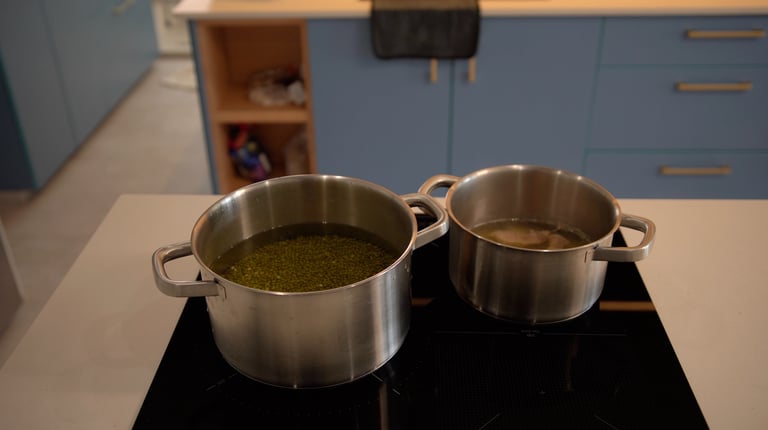
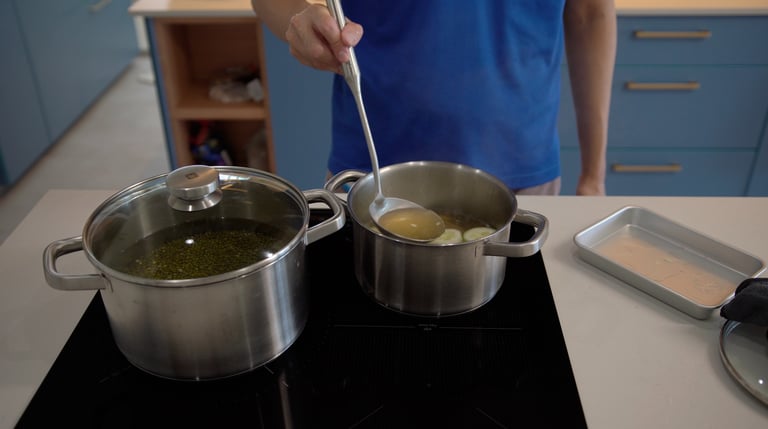
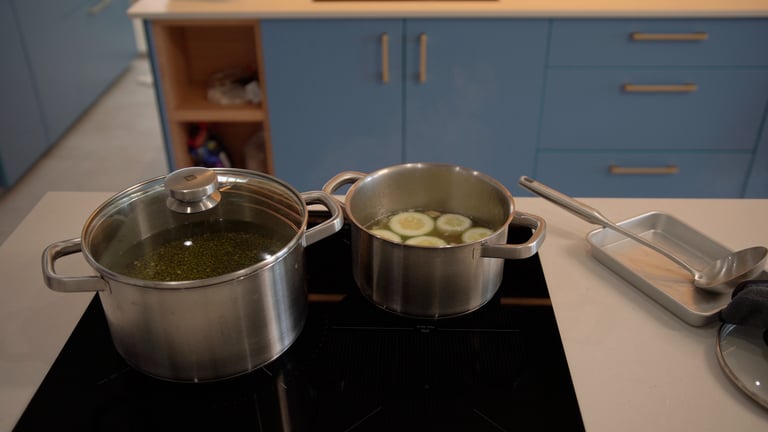
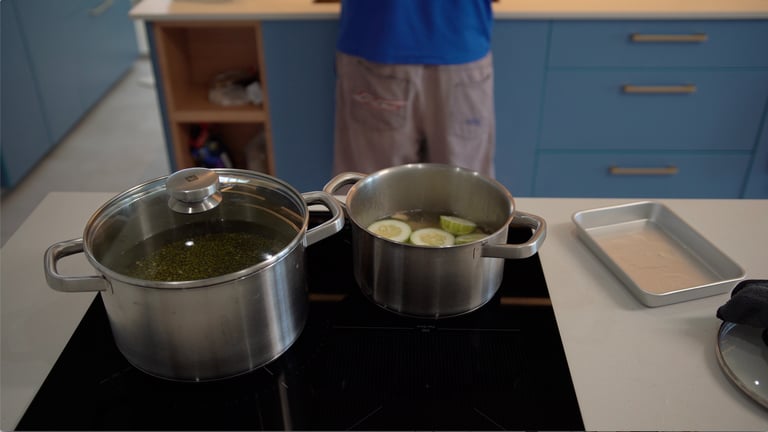
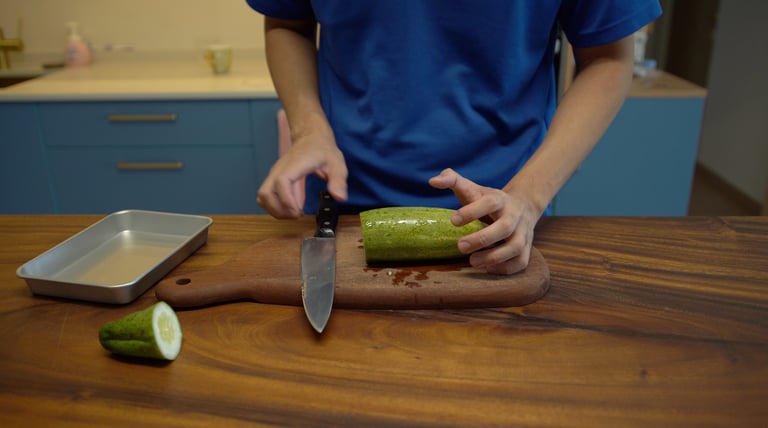
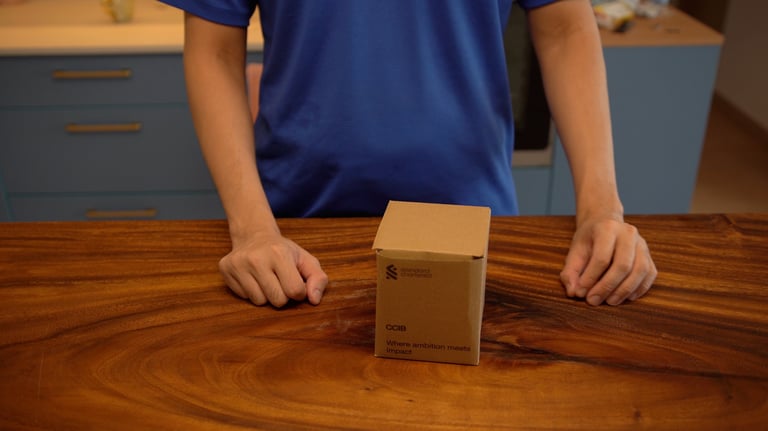
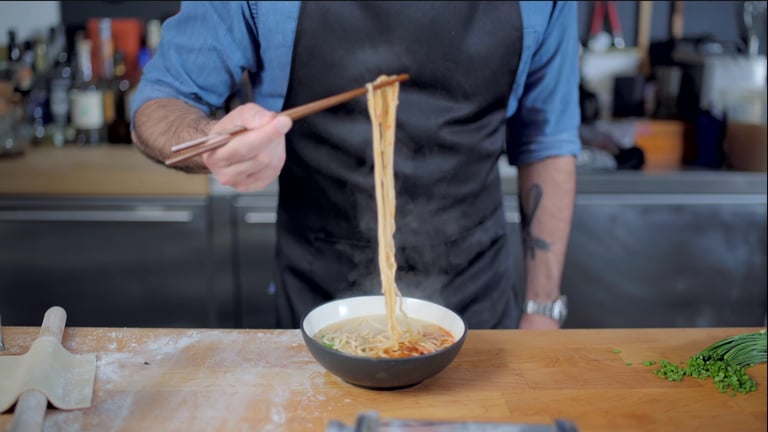
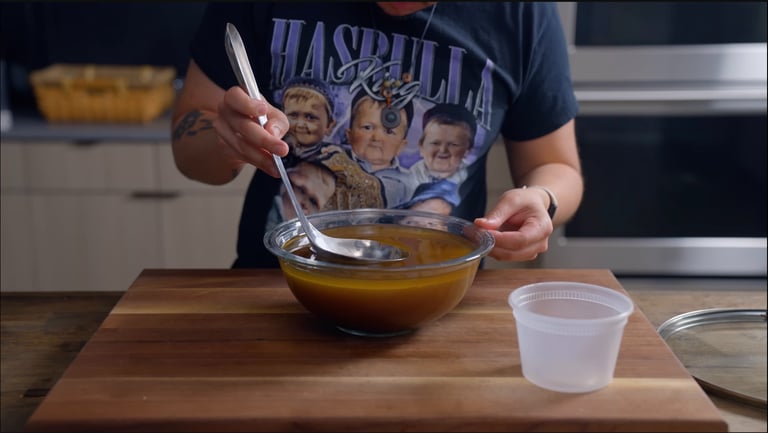
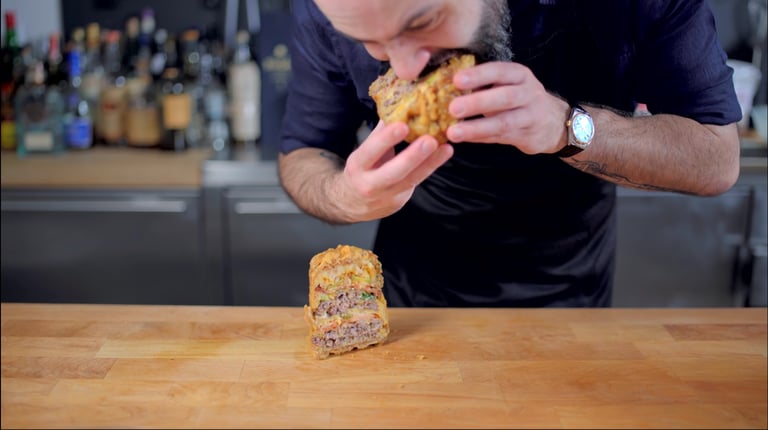
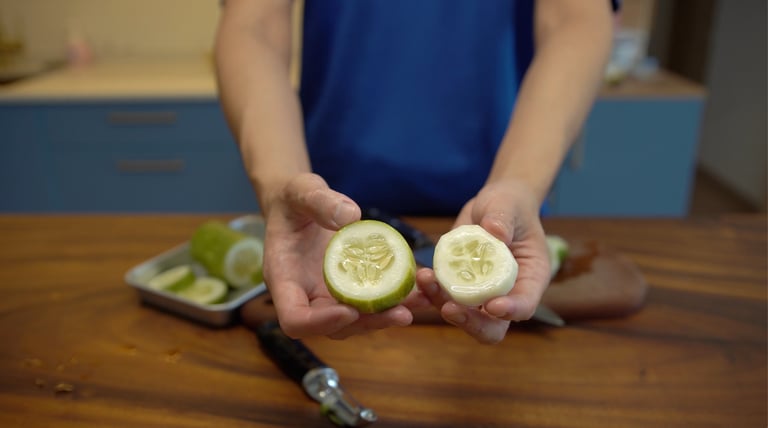
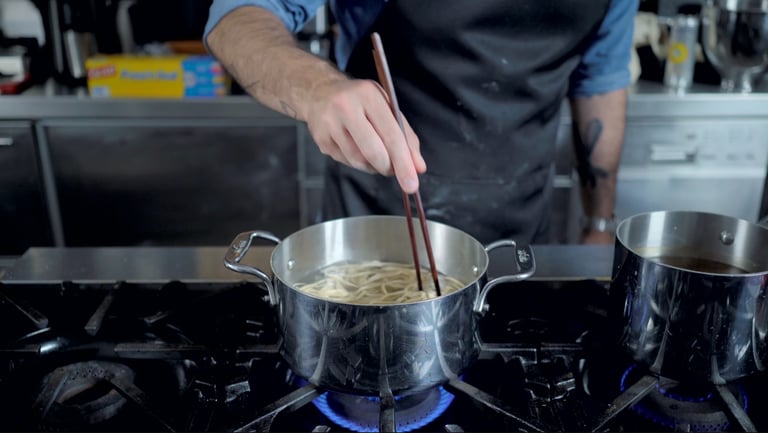
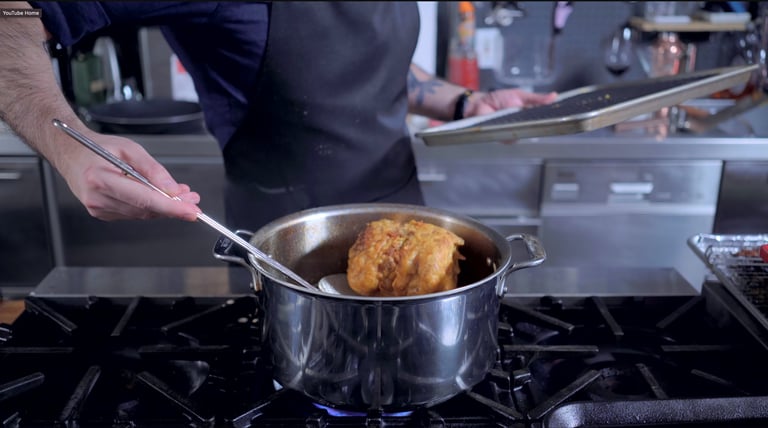
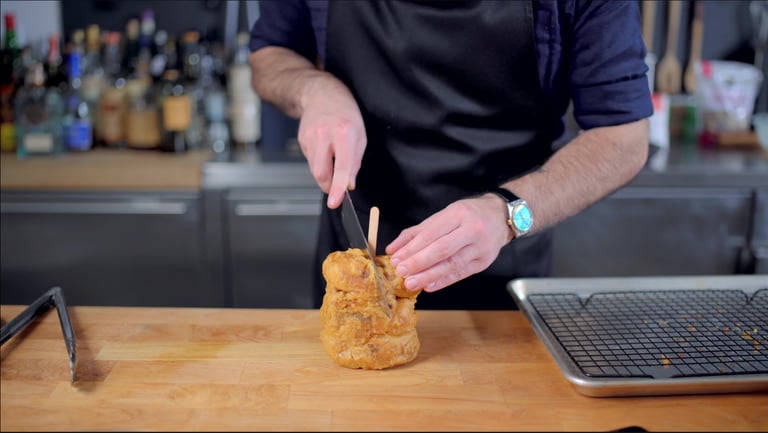
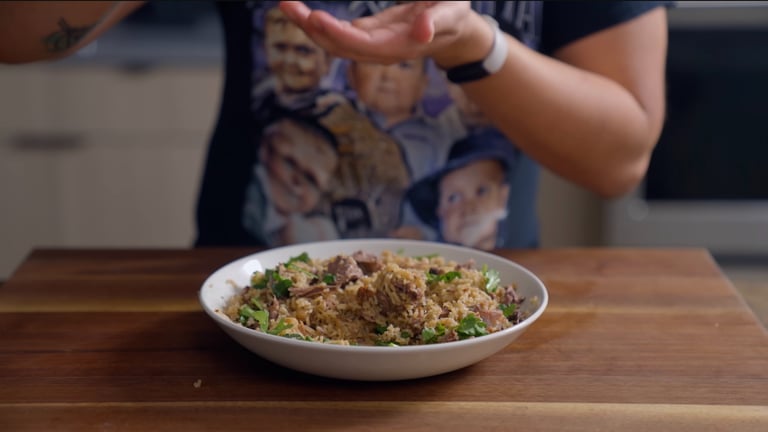
For food prep, it seems like the end of table should make up 1/3 to 1/4 of the frame. My demo here is showing up to half, positioning the food in the center. TIlt and height seems right, but I should try getting table to be 1/3 the frame height and see abit more background.
Again using Babish's videos as reference
Reference videos:
Subscribe to stay updated
Subscribe to my free newsletter to stay updated on new posts. You can unsubscribe anytime, no hard feelings.